



-
 Written By:
Alex Herrera
Written By:
Alex Herrera
-
 Edited By:
Phyllis Rodriguez, PMHNP-BC
Edited By:
Phyllis Rodriguez, PMHNP-BC
-
 Clinically Reviewed By:
Dr. Ash Bhatt, MD, MRO
Clinically Reviewed By:
Dr. Ash Bhatt, MD, MRO
Lyrica (pregabalin) is one of the most commonly prescribed medications in the United States, with millions of people taking it to manage nerve pain, fibromyalgia, and seizures. While it’s an FDA-approved medication that helps many patients regain quality of life, a significant concern has emerged around its potential for dependence and misuse. Unlike some other pain medications, Lyrica’s addiction risk isn’t always obvious, but it’s very real.
This article breaks down what Lyrica is, how it works, the risks associated with taking it, and what to do if you or a loved one is struggling with dependence. Whether you’re considering this medication, currently taking it, or concerned about its misuse, you’ll find evidence-based information and guidance on next steps.
Key Takeaways1. Lyrica is widely prescribed, but its risks are often underestimated While Lyrica is effective for nerve pain, fibromyalgia, and seizures, its calming and euphoric effects can make it habit-forming over time. Many patients begin using it exactly as prescribed but are unaware of how quickly tolerance and physical dependence can develop, especially with long-term use. 2. Dependence can develop quietly, even in high-functioning individuals Unlike substances with obvious behavioral changes, Lyrica misuse is often subtle. Individuals may continue to perform well at work and maintain daily responsibilities while internally struggling with increasing reliance, withdrawal symptoms, or failed attempts to cut back. This makes early recognition more difficult—but also more important. 3. Stopping Lyrica suddenly can worsen the cycle of dependence Withdrawal symptoms, such as anxiety, insomnia, and rebound pain, can begin even after the drug has left the system. Without proper medical guidance, many individuals restart use simply to relieve these symptoms. A medically supervised taper and structured treatment plan significantly improve the chances of safe, long-term recovery. |
What Is Lyrica and How Does It Work?
Lyrica is the brand name for pregabalin, a prescription medication that belongs to a class of drugs called anticonvulsants (also used as anti-anxiety medications). Originally developed to treat seizures, doctors discovered that it was highly effective at managing nerve pain, leading to its FDA approval for neuropathic pain conditions and fibromyalgia.
The medication works by calming overactive nerve signals in the brain and spinal cord. When nerve cells send pain signals too frequently, as happens with conditions like diabetic neuropathy or fibromyalgia, Lyrica reduces the intensity and frequency of those signals, providing relief. It also has a mild sedative effect, which can help patients with both pain and anxiety.
| Common uses for Lyrica include managing nerve pain from diabetes, shingles, or spinal cord injuries; treating fibromyalgia; and controlling seizures in people with epilepsy. Its versatility and relatively fast-acting nature made it a popular choice, but that popularity came with unintended consequences. |
Is Lyrica Safe? Side Effects and Risks
Like any medication affecting the central nervous system, Lyrica carries both short-term and long-term risks. While many side effects are manageable, others can significantly interfere with daily functioning.
1. Most Common Side Effects of Lyrica
The most frequently reported side effects include drowsiness and dizziness, which affect up to 30% of users in early treatment. Does Lyrica make you sleepy? Yes, this is intentional to some degree, as the medication’s calming effect helps reduce pain perception.
However, for many patients trying to maintain work and daily responsibilities, this drowsiness becomes problematic. Weight gain is another significant side effect, with patients often gaining 10-15 pounds within the first few months. This weight gain can persist and worsen over time.
2. How Lyrica Affects Memory and Focus
Beyond physical side effects, users frequently report cognitive impacts. Brain fog, a persistent feeling of mental cloudiness, affects concentration and decision-making. Memory issues are also common, with patients reporting difficulty retaining new information. For professionals, students, or anyone who relies on sharp mental clarity, these cognitive side effects can significantly impact quality of life.
3. Serious Side Effects: Mood Changes and Mental Health Risks
More concerning are the mood-related side effects. Some users experience increased anxiety or depression (which is ironic, given that anxiety relief is sometimes a reason for taking it). Others report mood swings, emotional numbness, or changes in personality.
In rare cases, Lyrica has been associated with suicidal thoughts, particularly in young people, a warning the FDA added to the medication’s label.
These risks are compounded by another critical issue: Lyrica’s potential for dependence. While marketed as safe and non-addictive, clinical and real-world evidence suggests otherwise.
Is Lyrica Addictive? What You Need to Know
The short answer: Yes, Lyrica can be addictive. While the pharmaceutical industry has long classified it as a non-controlled substance, the DEA reclassified pregabalin as a Schedule V controlled substance in 2019, the same year the agency acknowledged its potential for misuse and dependence.
When prescribed as directed, Lyrica is beneficial and safer than opioids. However, when misused, taken in higher doses than prescribed, combined with other substances, or taken for its psychoactive effects rather than medical benefits, it becomes a drug of dependence.
Dependence vs. Addiction: Understanding the Difference
Physical dependence develops when the body adapts to the presence of a drug, leading to withdrawal symptoms when it’s stopped or reduced. Addiction, on the other hand, involves compulsive drug-seeking behavior despite harmful consequences.
A person can be physically dependent on Lyrica (as prescribed by a doctor) without being addicted. However, addiction often develops from dependence, especially when the drug is misused.
Why Lyrica Misuse Happens
Lyrica is misused for several reasons. First, its relaxation and euphoric effects are reinforcing, users feel calm, sometimes euphoric, and stress-free.
Second, it’s perceived as ‘safer’ than opioids, leading people to underestimate its risks.
Third, combining Lyrica with other substances (particularly opioids, benzodiazepines, or alcohol) creates a dangerous synergy that intensifies the high and increases the addiction potential. Street users often call it ‘liquid ecstasy’ because of the euphoric sensations it can produce when misused.
The problem deepens because Lyrica misuse often goes unnoticed, it doesn’t have the same stigma as opioid addiction, so people and even healthcare providers may dismiss warning signs.
How to Tell If Lyrica Use Is Becoming a Problem
If you’re concerned about your own use or a loved one’s, knowing what to look for is critical.
Behavioral Red Flags
- Taking more than the prescribed dose
- Running out of medication before the refill date
- Visiting multiple doctors to obtain more prescriptions
- Intense cravings when the medication isn’t available
- Combining Lyrica with alcohol, opioids, or benzodiazepines
- Continued use despite negative consequences (job loss, relationship problems, financial strain)
- Neglecting responsibilities or hobbies
Understanding Withdrawal: When Lyrica Leaves Your System
How long does Lyrica stay in your system? The medication has a relatively short half-life of about 6 hours, meaning the body eliminates half of it within that timeframe. However, withdrawal symptoms typically don’t begin until 12-48 hours after the last dose and can last 1-2 weeks, even though the drug itself is nearly gone from the system. This delayed onset is why many people are caught off-guard by withdrawal.
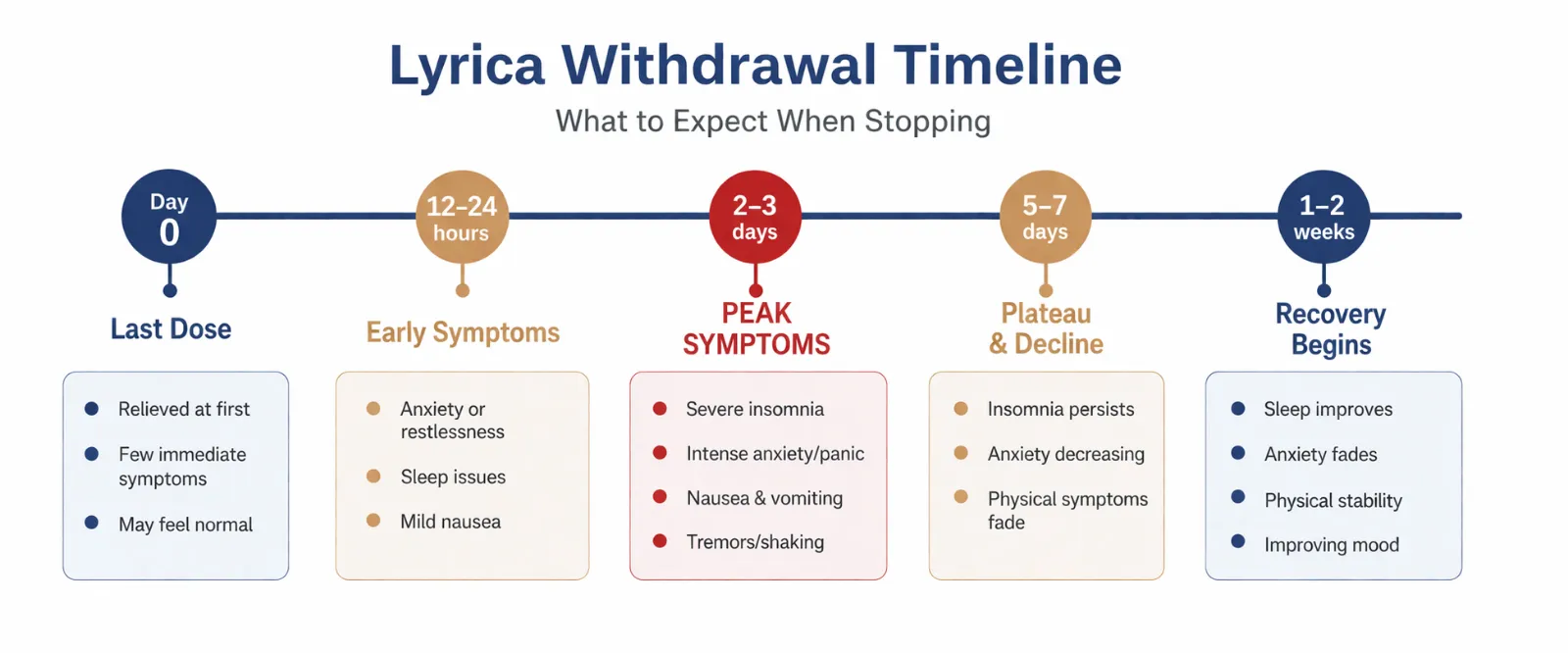
Withdrawal Symptoms
Stopping Lyrica abruptly (or ‘cold turkey’) can trigger a range of withdrawal symptoms, some of which mirror the original condition the medication was treating, making people think they need to restart it.
- Anxiety and panic attacks
- Insomnia and severe sleep disturbances
- Nausea, vomiting, and loss of appetite
- Sweating and chills
- Tremors or shaking
- Confusion and ‘brain zaps’ (electric shock-like sensations)
- Rapid heartbeat or chest pain
- Return of original pain or increased pain
- Depression and suicidal ideation
| Critical point: Stopping suddenly is not just uncomfortable, it can be dangerous. The severity of withdrawal is often what drives people back to using Lyrica, creating a cycle of dependence. |
How to Safely Stop Taking Lyrica
If you’re taking Lyrica and want to stop, the most important rule is: never do it abruptly.
Tapering: The Safe Approach
Tapering involves gradually reducing the dose over time, allowing your body to adjust slowly. A typical taper might involve reducing the dose by 10-25% every few days to a week, depending on how long you’ve been taking it and at what dose. For example, someone taking 300mg three times daily might reduce to 250mg, then 200mg, and so on over several weeks.
Must Be Medically Supervised
Medical Disclaimer: This information is educational. DO NOT attempt to taper off Lyrica on your own. Tapering must be done under the supervision of a healthcare provider who can monitor your physical and mental health, adjust the schedule based on your response, and prescribe medications if needed to manage withdrawal symptoms.
A doctor or addiction specialist will create a personalized tapering schedule, monitor for withdrawal symptoms, and potentially prescribe medications to ease the process. In some cases, transitioning to a longer-acting version of a similar medication (like taking gabapentin) can ease withdrawal before tapering completely.
This medical supervision is not optional, it’s essential. It’s the difference between a difficult-but-manageable process and a potentially dangerous one.
When to Seek Treatment for Lyrica Dependence
Lyrica dependence can develop in anyone, including successful professionals, executives, and high-functioning individuals. The medication’s accessibility and ‘safer’ reputation make it easy to develop a dependency without anyone knowing.
The Hidden Nature of Lyrica Addiction
For professionals and executives, Lyrica dependence poses a unique challenge. Unlike visible signs of opioid addiction or alcohol use disorder, Lyrica users can often maintain their outward functioning, they continue to perform at work, manage finances, and appear stable. However, the internal struggle is real: anxiety about running out, difficulty managing withdrawal, failed attempts to cut back, and the growing shame of dependency.
Key Signs It’s Time to Seek Professional Help
- You’ve tried to reduce or stop Lyrica multiple times but can’t stick to it
- You’re experiencing withdrawal symptoms that interfere with work, relationships, or daily functioning
- You’re taking more than prescribed or using it more frequently than directed
- You’re combining Lyrica with alcohol or other drugs to enhance the effect
- Your use is causing relationship, financial, or professional consequences
- You feel unable to function without it, even if you originally took it as prescribed
What Recovery from Lyrica Dependence Looks Like
Professional addiction treatment for Lyrica dependence typically includes medical detoxification (where withdrawal is managed under medical supervision), behavioral therapy (to address the psychological dependence and any underlying conditions like chronic pain or anxiety), and aftercare planning. Unlike opioid addiction, Lyrica dependence doesn’t require medications like methadone or buprenorphine, instead, the focus is on medically supervised tapering combined with therapy.
At Legacy Healing, our personalized approach means you’re not treated like a statistic. We address the root of why you became dependent (managing chronic pain, anxiety, stress) and create a path forward that doesn’t mean living with untreated pain or anxiety.
Take the First Step Toward Recovery
If you’re struggling with Lyrica dependence, know that recovery is possible. You don’t have to manage this alone, and you don’t have to suffer through withdrawal. Professional support makes all the difference.
We offer confidential, personalized addiction treatment designed for your unique needs. Whether you’re concerned about your current use, struggling with dependence, or looking for support tapering off Lyrica, our team of specialists is here to help, not judge.
Benefits of choosing our treatment center:
- Comprehensive medical and psychological assessment
- Medically supervised detoxification and tapering
- Dual diagnosis treatment (addressing both addiction and underlying conditions)
- Evidence-based therapy and counseling
- Insurance verification and flexible payment options
- Ongoing support and relapse prevention planning
Contact us today at 732-402-0352 for a confidential consultation. Recovery starts with reaching out.