


-
 Written By:
Alex Herrera
Written By:
Alex Herrera
-
 Edited By:
Phyllis Rodriguez, PMHNP-BC
Edited By:
Phyllis Rodriguez, PMHNP-BC
-
 Clinically Reviewed By:
Dr. Ash Bhatt, MD, MRO
Clinically Reviewed By:
Dr. Ash Bhatt, MD, MRO
Living with chronic pain is exhausting in ways that go far beyond the physical sensation. It creates a unique kind of suffering that only people who experience it truly understand.
For many people, chronic pain begins with a legitimate injury or medical condition. They see their doctor and receive pain medication, often opioids. And for many people, this is exactly what happens: they take the medication as prescribed, their pain improves, and they move forward.
But for many others, the medication that was supposed to be a temporary tool becomes a daily necessity. And gradually, almost imperceptibly, managing pain medication becomes as consuming as managing the pain itself.
Key Takeaways
|
At Legacy Healing NJ, we frequently work with individuals whose chronic pain and substance use have become deeply interconnected. But chronic pain significantly increases addiction risk, and through this article, we will try to understand all about this connection that every person managing chronic pain needs to know.
Understanding Chronic Pain Beyond Physical Symptoms
One of the biggest misconceptions about chronic pain is that it only affects physical health. In reality, chronic pain can influence nearly every part of a person’s life, including sleep, emotional well-being, relationships, work performance, and overall quality of life.
When pain becomes constant, the nervous system remains in a prolonged state of stress. Over time, this ongoing strain can leave people physically exhausted and emotionally overwhelmed.
Sleep disruption is especially common. The National Library of Medicine reports that 65-80% of people with chronic pain experience significant sleep disruption. Poor sleep can then intensify pain sensitivity, emotional distress, and fatigue, creating a difficult cycle to break.
Over time, chronic pain symptoms can contribute to:
- Sleep disruption
- Emotional exhaustion
- Anxiety and depression
- Social withdrawal
- Difficulty maintaining routines
- Reduced physical activity
- Feelings of hopelessness or frustration
When the body and mind remain under constant stress, temporary relief can begin to feel emotionally essential. This is the exact state where substances become dangerously appealing, and this becomes the reason addiction risk can increase over time.
Why Chronic Pain Can Increase Addiction Risk
Pain itself does not automatically cause addiction. However, persistent pain can create physical and emotional conditions that make substance dependence more likely, especially when relief feels temporary or inconsistent.
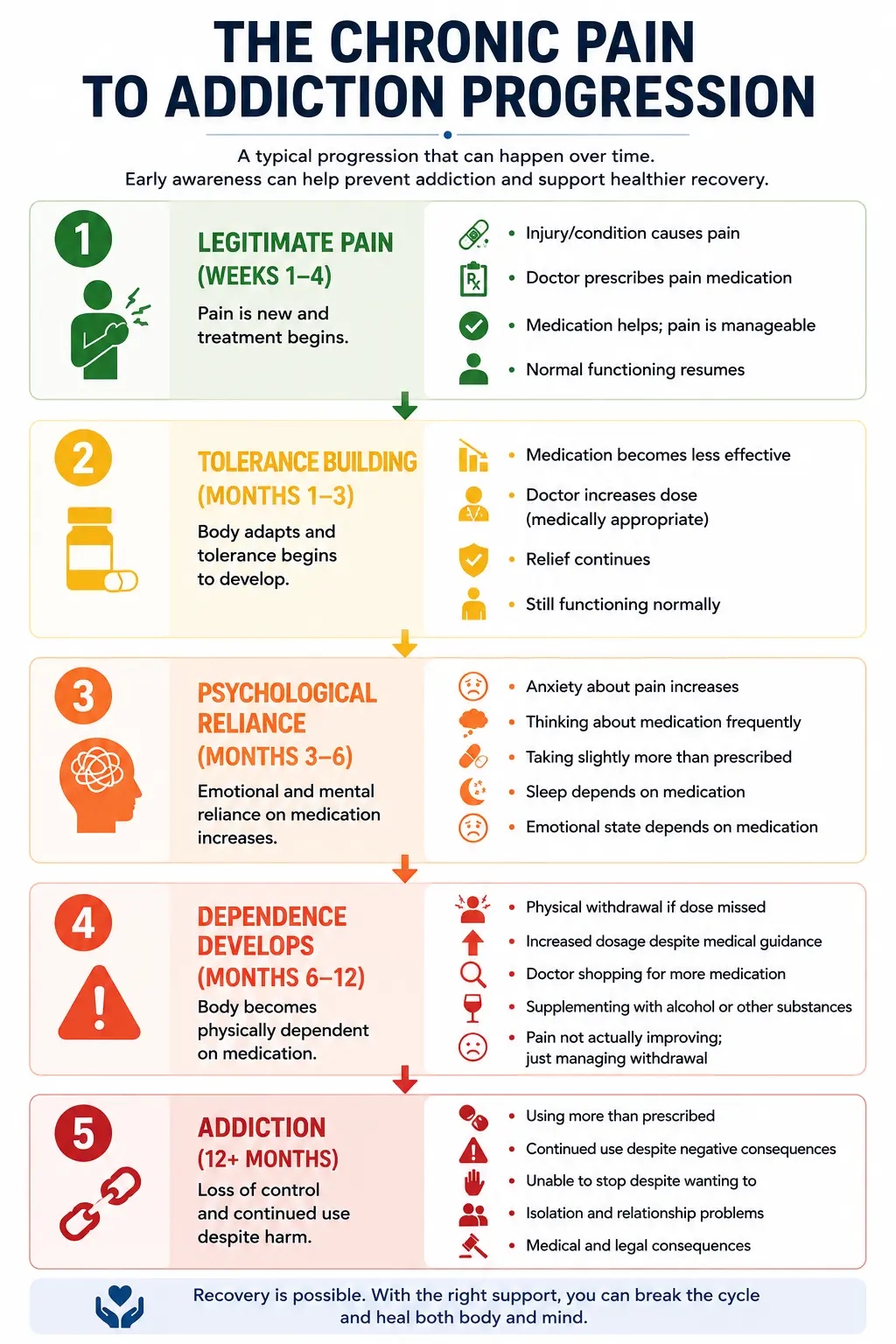
Many individuals with chronic pain are prescribed opioid medications after surgery, injury, or ongoing medical conditions. Medications such as oxycodone, hydrocodone, or tramadol can be medically appropriate when carefully monitored. But with prolonged use, the body can gradually develop tolerance.
Tolerance means the same dosage no longer provides the same level of relief, leading to increased medication use or feeling emotionally dependent on the sense of relief it provides.
The National Institute on Drug Abuse (NIDA) explains that long-term opioid exposure changes how the brain responds to pain, reward, and stress. Over time, physical dependence and addiction can develop separately or together.
Understanding the difference matters:
- Physical dependence occurs when the body adapts to a medication and experiences withdrawal symptoms if use suddenly stops.
- Addiction involves compulsive substance use despite harmful consequences.
Not everyone with dependence develops addiction. However, chronic pain addiction risk increases when emotional distress, sleep deprivation, trauma, or isolation are also present.
| An Important Reminder From Dr. Rodriguez “Chronic pain changes more than the body; it can quietly reshape emotions, routines, and the way a person searches for relief. I always tell my patients that identifying this link early is the best first step you can take toward protecting both physical and emotional well-being.” |
The Emotional Burden of Living With Constant Pain
When pain becomes chronic, it’s not just a medical condition; it becomes the dominant experience of your life, and people often manage the emotional burden with the help of substances to numb or escape reality.
In fact, the emotional effects of chronic pain are often invisible to other people, making the experience even more isolating. A person might be dealing with long-term pain but still appear fully functional from the outside while struggling with frustration, anxiety, grief, or exhaustion.
According to the National Library of Medicine reports, chronic pain and depression commonly occur together, with pain significantly increasing emotional distress and mental health challenges.
Common emotional symptoms associated with chronic pain may include:
- Persistent stress
- Depression
- Anxiety
- Sleep deprivation
- Emotional irritability
- Difficulty concentrating
In many cases, emotional distress is not a separate issue from chronic pain, it is a part of the condition itself.
A Reflection From Dr. Bhatt“Chronic pain rarely affects just one part of a person’s life, it slowly touches sleep, emotions, relationships, and even a person’s sense of hope. I want people to know that the weight of emotional pain is real and valid, and it is as important as seeking treatment for physical symptoms themselves.” |
Common Pain Medications Associated With Dependency Risks
Understanding which medications carry dependency risk helps people and doctors make informed decisions about pain management. The goal is not to avoid all pain medication, but to understand the risks and monitor carefully.
- Oxycodone is one of the strongest prescribed opioids. It’s effective for severe pain; however, its strength and abuse potential mean it requires careful monitoring and patient education. Medical experts may prescribe it, but never without a clear exit strategy and regular reassessment.
- Hydrocodone is slightly less potent than oxycodone but widely prescribed for moderate to severe pain. Because it’s somewhat normalized in medical practice, patients sometimes underestimate its addiction potential.
- Tramadol bridges the gap between non-opioid and opioid pain management. Many doctors prescribe it, thinking it carries a lower addiction risk, but this perception isn’t accurate. The medication affects multiple neurotransmitter systems, making it particularly tricky when combined with other substances.
- Benzodiazepines like alprazolam or clonazepam are commonly prescribed for anxiety that accompanies chronic pain. The danger here is the synergistic effect: combining benzodiazepines with opioids creates increased respiratory depression risk and significantly amplifies dependence potential.
Healthier Long-Term Approaches to Pain Management
The good news is that effective, non-addictive pain management exists. These approaches often work better long-term than medication alone because they address multiple dimensions of pain experience simultaneously, such as:
- Physical therapy and movement. These are the foundational treatments for patients with chronic pain because the structured movement reduces pain, enhances sleep, and builds the physical resilience that makes pain more psychologically manageable.
- Cognitive behavioral therapy. It helps change the thought patterns and behavioral responses that amplify suffering. When someone learns that catastrophizing about pain actually increases pain perception, and then learns to interrupt those thought patterns, the pain substantially improves.
- Mindfulness and acceptance practices. These help patients coexist with pain rather than fighting it constantly. Learning to observe pain without immediately resisting it can paradoxically reduce its psychological impact.
- Anti-inflammatory lifestyle changes. This treatment step addresses pain at its source in many cases. By reducing inflammatory foods, increasing omega-3 intake, managing weight, and improving sleep, one can reduce pain levels.
- Nutrition optimization. It is specific and important. Sometimes, addressing nutritional deficiencies in vitamins D and magnesium that affect pain perception and inflammation can significantly reduce pain.
- Integrated care approaches. It combines medical management with physical therapy, mental health treatment, and lifestyle optimization to produce the best outcomes. The combination approach addresses the multiple dimensions of chronic pain experience.
Treating Chronic Pain and Addiction Together
The traditional approach was sequential: first treat addiction, then address chronic pain. But this doesn’t work anymore because chronic pain drives relapse. Someone can get sober in treatment, leave, experience their chronic pain again, and return to using because pain relief was the original motivation.
At Legacy Healing Center NJ, we use an integrated treatment model that addresses the chronic pain and addiction interaction at every biological and psychological level.
- Dual diagnosis care: This means assessment and treatment planning that explicitly addresses both conditions from day one. If someone has both chronic pain and substance use disorder, we design the treatment to work together. Pain medication adjustment, if needed, is integrated with addiction treatment rather than happening in separate clinics.
- Trauma-informed therapy: Most people with both chronic pain and addiction have significant trauma histories. That is why we focus on healing the trauma, which reduces both pain sensitivity and addiction vulnerability.
- Medical detoxification or rehab treatment: Stopping pain medication abruptly worsens pain and makes addiction recovery feel impossible. However, with appropriate medical detox and treatment at our luxury rehab help manage both withdrawal symptoms and pain symptoms simultaneously.
- Behavioral therapy: This model addresses the learned patterns that maintain both conditions. For someone who has learned that medication brings relief or alcohol helps with sleep, behavioral relearning can help improve their condition.
- Comprehensive mental health support: For treating the depression and anxiety that often underlie both conditions.
- Personalized treatment planning: Since every patient’s combination of pain conditions, psychological factors, and addiction history is unique. We offer individualized care for a person with chronic pain and addiction in a luxury treatment environment to offer the best treatment combined with a healing environment.
When to Seek Professional Support
If chronic pain management is beginning to feel emotionally overwhelming or difficult to control, seeking support early can make a significant difference.
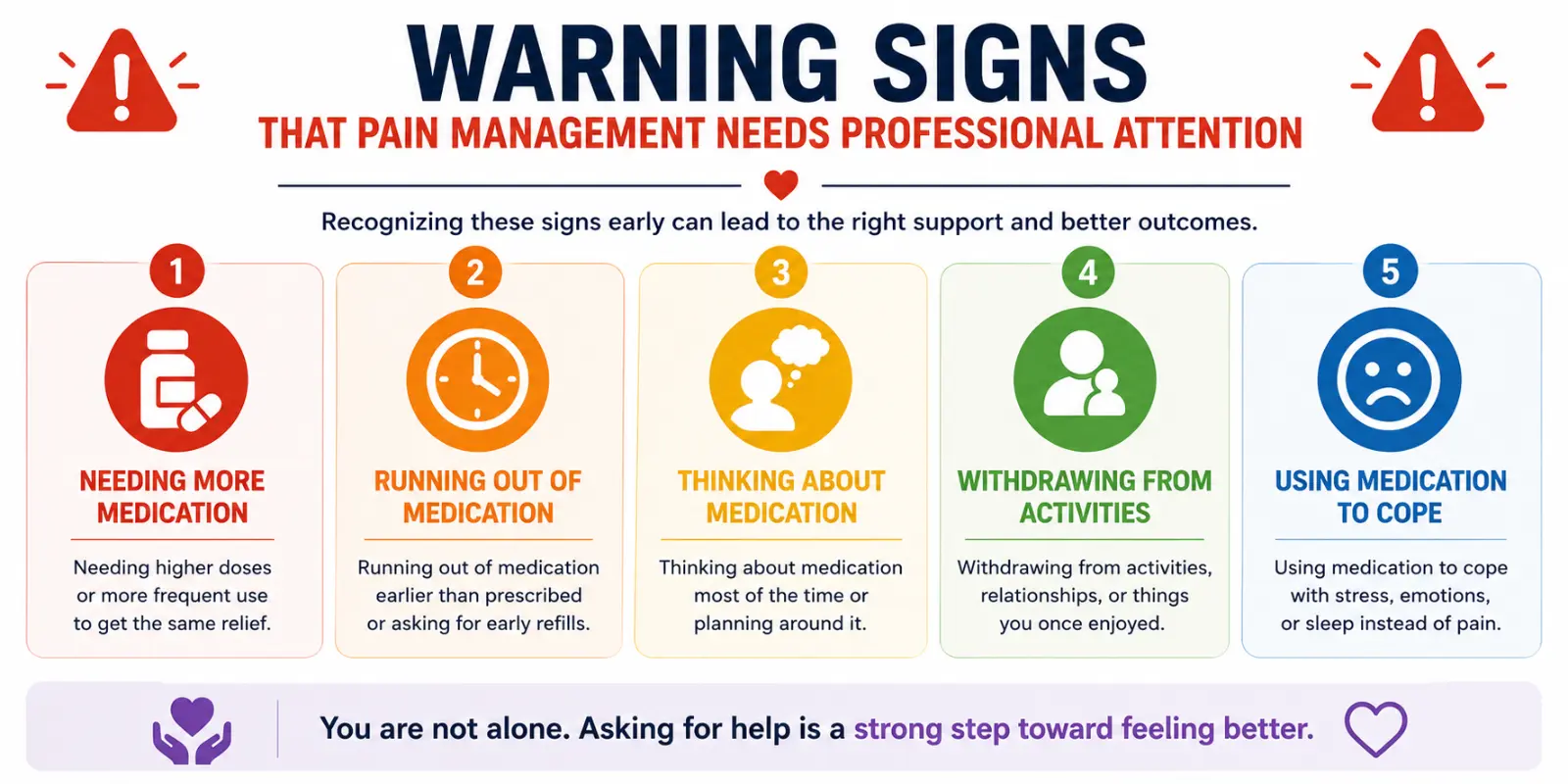
You should consider speaking with a healthcare professional if you:
- Take pain medication more often than prescribed
- Feel anxious when medication is running low
- Use alcohol or other substances to cope with pain or sleep difficulties
- Find it difficult to reduce medication use despite wanting to
- Notice growing emotional distress related to pain
- Have loved ones expressing concern about your medication or substance use
The truth is this: recognizing the problem and reaching out is the strongest thing you can do. It requires more courage than continuing to suffer in silence. And reaching out early, when you first notice concerning patterns, dramatically improves your prognosis.
Get Help Now: Compassionate Support for Chronic Pain and Addiction Recovery
Living with chronic pain is hard, and developing addiction to that adds another layer of suffering. But recovery is possible, and you can rebuild your life without opioid dependence and without abandoning pain management.
At Legacy Healing Center New Jersey, we specialize in integrated treatment for chronic pain and addiction. We understand that these aren’t separate problems; they’re interconnected. We have pain management doctors who understand addiction and treat both simultaneously with complete confidentiality and compassion.
Call Legacy Healing NJ Today