


-
 Written By:
Alex Herrera
Written By:
Alex Herrera
-
 Edited By:
Phyllis Rodriguez, PMHNP-BC
Edited By:
Phyllis Rodriguez, PMHNP-BC
-
 Clinically Reviewed By:
Dr. Ash Bhatt, MD, MRO
Clinically Reviewed By:
Dr. Ash Bhatt, MD, MRO
When people think about substance misuse, they often picture alcohol, opioids, cocaine, or methamphetamine. They rarely think about inhalants, and yet inhalant abuse has become one of the most medically dangerous forms of substance use because the substances involved are often common household or commercial products.
So, first, we need to understand what inhalants are. Inhalants are chemical vapors that produce psychoactive effects when inhaled. They can include aerosol sprays, cleaning products, solvents, fuels, nitrous oxide, and other gases. Many are inexpensive, widely available, and legal to purchase.
Adding to the concern is the growing misuse of nitrous oxide among adults. Understanding why inhalants can become life-threatening, how they affect the brain and body, and why certain forms of misuse are becoming more common is essential for recognizing the risks early and seeking appropriate support.
In this article, we will explore the hidden dangers of inhalant use, its impact on cognitive and physical health, and the pathways to recovery.
Key Takeaways
|
What Makes These Substances So Dangerous Compared to Other Drugs?
Many people ask, why are inhalants dangerous, especially compared to other substances.
One reason is that inhalants directly interfere with oxygen delivery within minutes. As chemical vapors displace oxygen in the lungs, the brain and other organs may receive less oxygen than they need to function properly.
Inhalants also expose the body to toxic chemicals that were never intended for human consumption. Once inhaled, these substances rapidly enter the bloodstream and travel throughout the body.
Some of the most serious risks of these substances include:
- Oxygen deprivation
- Toxic chemical exposure
- Cardiac sensitization
- Irregular heart rhythms
- Sudden cardiac complications
- Respiratory distress
- Loss of consciousness
Unlike alcohol, opioids, or stimulants, inhalants act immediately making it life-threatening even when someone does not have a long history of addiction. Hence, a single episode may trigger what medical professionals refer to as “sudden sniffing death syndrome,” a fatal cardiac event that can occur in otherwise healthy individuals.
| Clinical Perspective From Dr. Rodriguez: Let me tell you one thing, that is, the heart doesn’t care whether this was someone’s first time or their hundredth. When volatile chemicals enter the bloodstream and sensitize the myocardium to catecholamines, a sudden scare, being startled, standing up too fast, or even a brief moment of panic can trigger ventricular fibrillation. The cases I have seen, some of them were not even possible to resuscitate because the cardiac event was over before they could respond. |
How Toxic Fumes and Chemical Vapors Affect the Brain and Nervous System
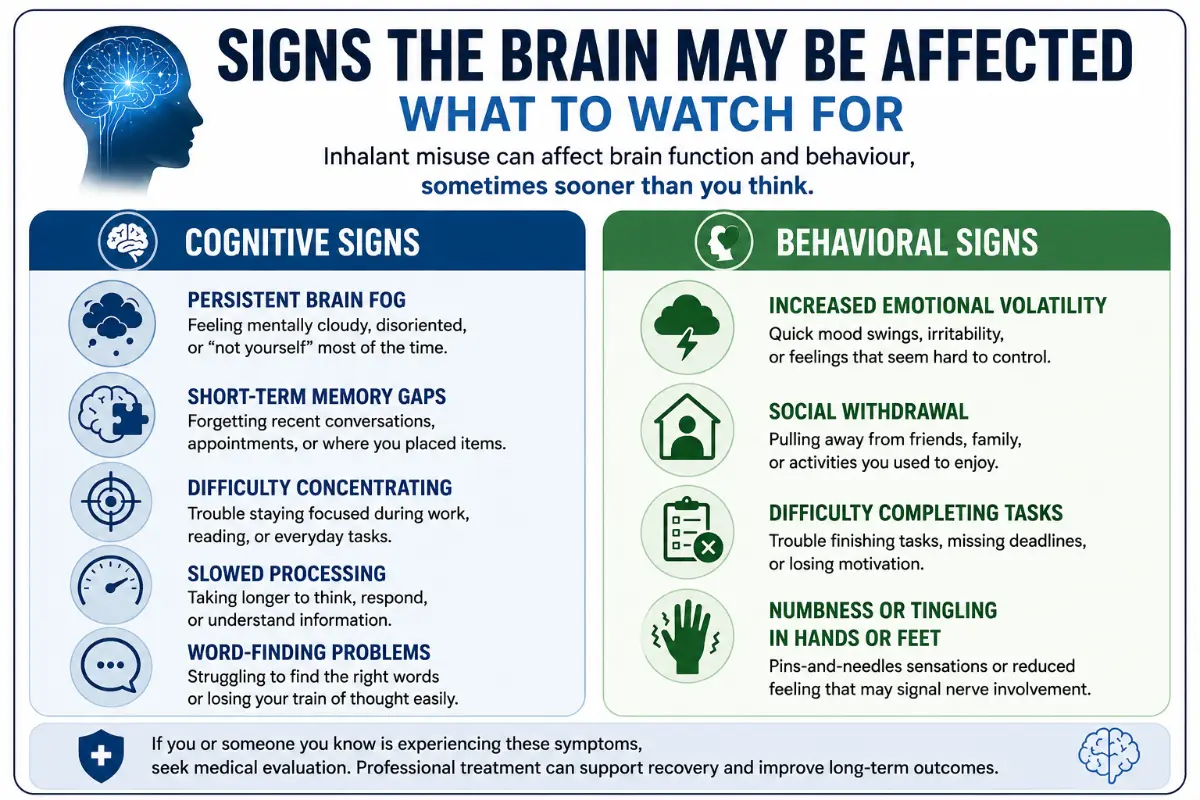
When people ask what do inhalants do to the brain, the answer extends beyond temporary intoxication. As much as it has immediate effects, the toxic fumes and chemical vapors also pose long-term effects, and their exposure may affect:
- Memory formation
- Decision-making abilities
- Processing speed
- Emotional regulation
- Attention and concentration
- Motor coordination
Oxygen deprivation further compounds the damage, because the brain is highly sensitive to reduced oxygen supply, and repeated episodes can impair cognitive functioning even after the intoxication has ended.
The discussion becomes particularly important when examining nitrous oxide misuse. Although often viewed as less dangerous than other inhalants, chronic nitrous oxide abuse can interfere with vitamin B12 metabolism. This may contribute to nerve damage, numbness, difficulty walking, weakness, and potentially lasting neurological complications if left untreated.
These neurological consequences represent some of the most concerning long term effects of inhalants, particularly when use continues without medical intervention.
The Hidden Physical Effects of Recreational Chemical Exposure
Beyond what inhalants do to the brain, the systemic physical toll is equally serious. When toxic chemicals circulate through the bloodstream, nearly every major organ system is exposed to their effects, often without the person realizing anything significant is happening.
Cardiovascular System
Chemical vapors can increase the risk of abnormal heart rhythms and sudden cardiac complications. Even short-term exposure may place significant strain on the heart.
Respiratory System
Inhalants may impair oxygen exchange, increase the risk of suffocation, and contribute to respiratory distress. Repeated exposure can place ongoing stress on lung function.
Liver and Kidneys
Many inhaled chemicals circulate through the bloodstream before being processed by the liver and kidneys. Chronic exposure may contribute to toxic injury within these organs.
Nervous System
Peripheral nerve damage, numbness, weakness, and impaired coordination are documented consequences of prolonged inhalant misuse
Cumulatively, what do inhalants do to the body? They trigger a slow, systemic process of chemical stress that rarely announces itself until significant damage has already occurred.
Why Nitrous Oxide and “Whippets” Are Becoming More Common Among Adults
Nitrous oxide abuse has evolved from an occasional novelty into a recognizable public health trend, driven largely by marketing, social media, and easy retail availability. The rise of brands like Galaxy Gas, large-format, flavored nitrous oxide canisters sold through smoke shops, gas stations, and major online retailers, created a product that felt approachable, colorful, and low-stakes. None of that reflects its actual risk profile.
Historically associated with whipped cream chargers and medical settings, nitrous oxide has become more visible in nightlife culture, social media content, and online retail environments. Products are often marketed with appealing flavors and branding that can minimize perceptions of risk.
Several factors appear to be driving the growth of nitrous oxide abuse and the broader whippets drug trend:
- Social media normalization
- Workplace burnout
- Emotional escapism
- Perceived safety compared to other drugs
- Easy online access
- Novelty and experimentation
The recent attention surrounding products marketed under names such as “Galaxy Gas” highlights how rapidly trends can spread when substances are presented as recreational products rather than potentially dangerous inhalants.
The Link Between Burnout, Escapism, and Recreational Chemical Exposure
People rarely begin using substances for the rush alone. Most initiation connects to something underneath, and inhalants are no exception.
Why adults are drawn to inhalants as an emotional escape:
- Burnout – the effects are fast and require no preparation, making them attractive to people managing chronic performance pressure
- Anxiety and emotional numbing – dissociative effects briefly interrupt the internal noise of unmanaged stress
- Trauma – substances that produce rapid dissociation are often used as self-medication when underlying trauma is unaddressed
- Professional isolation – high-functioning adults often have no framework for identifying their own misuse; the product’s legal status reinforces denial
- Online normalization – social media has made whippets appear low-stakes, widespread, and socially acceptable
The question of whether inhalants are addictive doesn’t have a simple yes or no answer. Approximately 10–15% of regular inhalant users develop signs of dependence, including cravings and withdrawal symptoms. But behavioral compulsion driven by emotional need can establish itself well before those clinical markers appear, particularly when someone doesn’t identify as a “drug user” at all.
Can Cognitive Function Improve After Inhalant Misuse?
The encouraging reality is that the brain retains plasticity and that meaningful cognitive recovery is possible, but it is neither automatic nor uniform.
Recovery depends on:
- Duration and intensity of use
- Which specific substances were involved
- Whether neurological damage was identified and treated early
- Whether co-occurring mental health conditions are being addressed simultaneously
For nitrous oxide users with B12-related neuropathy, early intervention makes a meaningful difference. At more than six months of follow-up, most patients showed moderate to complete recovery, though short-term outcomes were generally less favorable.
For individuals with more extensive white matter deterioration from solvent abuse, recovery is slower and requires structured cognitive rehabilitation alongside addiction treatment.
What supports healing:
- Nutritional restoration, particularly B12 and cofactors
- Psychiatric stabilization and sleep normalization
- Therapeutic modalities that rebuild executive function
- Dual diagnosis treatment that addresses both addiction and emotional drivers
What Dr Rodriguez Has to Say:When I work with patients recovering from inhalant use, I evaluate the whole picture, neurological status, nutritional deficiencies, sleep architecture, and what was happening emotionally before use escalated. The brain does recover, but it needs the right conditions, and integrated treatment has been very good approach for treating these cases than any single-modality approach. |
When Professional Support Becomes Necessary
When someone uses an inhalant, there is rarely a turning point. More often, recognising the pattern comes slowly, cognitive fog is there, the usage is only increasing in frequency, while emotional functioning also keeps on deteriorating without an obvious cause.
What professional support for inhalant misuse actually involves:
- Psychiatric evaluation – This is to assess cognitive and neurological impact alongside any co-occurring conditions
- Trauma-informed therapy – This is to understand the emotional drivers that frequently underlie adult inhalant use
- Dual diagnosis treatment – This is to treat both the substance use pattern and underlying mental health conditions simultaneously
- Medical supervision – This one is particularly for neurological monitoring and nutritional restoration
- Cognitive rehabilitation – This one provides structured support for executive function, memory, and processing speed where indicated
For many individuals, meaningful recovery requires a treatment approach that addresses substance use, mental health, trauma, and cognitive functioning together. Comprehensive programs that combine medical oversight, therapeutic support, and personalized recovery planning can provide the structure needed for both neurological healing and long-term emotional wellness.
Conclusion
Inhalants are legally available, socially underestimated, and clinically underrecognized, yet among the most acutely dangerous substances encountered in addiction medicine. With nitrous oxide deaths up over 500% since 2010 and new products continuing to reach younger and broader demographics, this is not a problem that is resolving on its own. Psychology Today
The neurological damage caused by inhalants is not always permanent. With early recognition and the right professional support, cognitive and emotional recovery is genuinely achievable. That possibility depends on taking the risk seriously, before the consequences become irreversible.
For individuals experiencing cognitive changes, emotional distress, or escalating inhalant use, seeking comprehensive treatment early can improve both short-term safety and long-term recovery outcomes.
Call Legacy Healing NJ Today
Available 24/7 for confidential consultation