



-
 Written By:
Todd Ludwig
Written By:
Todd Ludwig
-
 Edited By:
Christina Holmes
Edited By:
Christina Holmes
-
 Clinically Reviewed By:
Dr. Ash Bhatt, MD, MRO
Clinically Reviewed By:
Dr. Ash Bhatt, MD, MRO
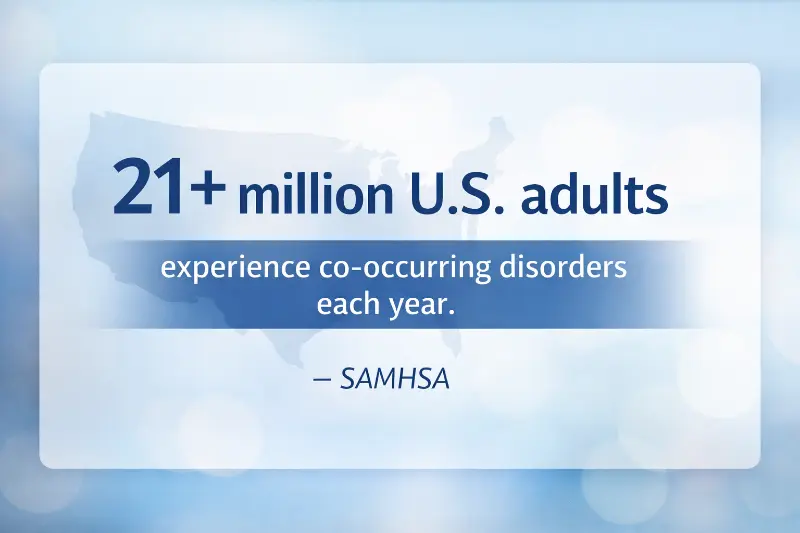
Dual diagnosis, when a substance use disorder occurs alongside a mental health condition, is far more common than many realize. According to the Substance Abuse and Mental Health Services Administration (SAMHSA), millions of U.S. adults experience co-occurring mental health and substance use disorders each year, and outcomes are significantly worse when both conditions are not treated together.
But statistics only tell part of the story.
For many individuals living with dual diagnosis, relapse is about emotional overwhelm. This is where DBT (Dialectical Behavior Therapy) for Dual Diagnosis becomes clinically powerful. This therapy focuses on strengthening emotional regulation skills, helping individuals tolerate distress, manage impulses, and navigate intense feelings without turning to substances.
In this article, we’ll explore how emotional dysregulation fuels relapse in co-occurring disorders and why integrated behavioral care plays a critical role in long-term dual diagnosis recovery.
Key Takeaways
1. Emotional Dysregulation Is a Major Driver of Relapse
In dual diagnosis, relapse often begins with emotional overwhelm, not lack of commitment. When individuals lack the tools to manage distress, substances can become a form of emotional escape.
2. DBT Teaches Practical Skills That Interrupt the Relapse Cycle
Dialectical Behavior Therapy strengthens emotion regulation, distress tolerance, impulse control, and mindfulness. These skills create space between intense feelings and destructive behaviors, reducing relapse risk.
3. Integrated Dual Diagnosis Care Improves Long-Term Stability
Treating mental health and substance use together across inpatient, PHP, and IOP care helps prevent symptom substitution and builds sustainable recovery through structured, skills-based support.
Why Emotional Control Is the Missing Link in Dual Diagnosis Recovery
For individuals living with co-occurring mental health and substance use disorders, relapse rarely begins with a conscious decision to use. It often begins with an emotional shift. When emotional intensity rises beyond a person’s capacity to manage it, substances can begin to feel like immediate relief.
This is the core issue: emotional regulation in dual diagnosis recovery is often underdeveloped or destabilized. Many individuals with co-occurring disorders already experience heightened emotional sensitivity. When addiction is layered on top, the nervous system becomes even more reactive. Substances temporarily blunt emotional pain, but over time, they lower distress tolerance and increase vulnerability to relapse triggers.
Emotional overwhelm narrows decision-making, which shows when the brain shifts into survival mode, prioritizing short-term relief over long-term consequences. In that state, coping without substances can feel nearly impossible, even for someone deeply committed to recovery.
This is why emotional control is foundational. In fact, emotional regulation becomes a daily practice, and DBT focuses directly on strengthening this capacity, helping individuals move from emotional reactivity to emotional stability.
Understanding Skills-Based Therapy for Co-Occurring Disorders
Dual diagnosis treatment requires more than understanding why substance use occurs. This is where skills-based treatment becomes essential. Several evidence-based behavioral therapies are used in therapy for co-occurring disorders, such as:
1. Dialectical Behavior Therapy (DBT)
DBT focuses heavily on emotional regulation and impulse control, two core drivers of relapse in dual diagnosis. It teaches structured skills that help individuals tolerate distress, reduce self-destructive behaviors, and stabilize intense emotional reactions.
2. Cognitive Behavioral Therapy (CBT)
CBT centers on identifying and restructuring unhelpful thought patterns that influence behavior. It helps individuals recognize triggers, challenge distorted thinking, and develop healthier behavioral responses.
3. Acceptance and Commitment Therapy (ACT)
ACT builds psychological flexibility by teaching individuals to experience difficult emotions without avoidance while committing to value-driven behavior. This approach is especially helpful for those who use substances to escape emotional discomfort.
4. Motivational Interviewing (MI)
Motivational Interviewing is a structured, collaborative approach that strengthens intrinsic motivation for change. It helps individuals resolve ambivalence about recovery and build confidence in their ability to sustain it.
While several therapies are skills-based, DBT is uniquely structured around emotional dysregulation, one of the strongest predictors of relapse in individuals with co-occurring mental health and substance use disorders. Originally developed to treat chronic emotional instability and self-harm behaviors, DBT has since been widely adapted for individuals struggling with both addiction and psychiatric conditions.
In integrated dual diagnosis treatment settings, including inpatient care, Partial Hospitalization Programs (PHP), and Intensive Outpatient Programs (IOP), these therapies are often combined rather than used in isolation.
At Legacy Healing Center NJ, we incorporate DBT within a broader, evidence-based behavioral care model that treats addiction and mental health conditions simultaneously.
How Emotional Pain Fuels Cravings and Risk-Taking Behaviors
For many individuals with dual diagnosis, substance use is not driven by pleasure; it is driven by relief. Intense emotions such as anxiety, anger, or trauma-related distress can activate powerful cravings, especially when emotional regulation skills are limited. Additionally, heightened emotional distress increases activity in the brain’s stress-response systems while weakening impulse control, making short-term relief feel urgent and necessary.
When emotional dysregulation and addiction intersect, the result is often reactive, high-risk behavior, and under emotional strain, individuals may engage in:
- Impulsive substance use to numb distress
- Escalated or binge patterns of use
- Self-harm or self-destructive coping behaviors
- Risky decision-making (driving under the influence, unsafe environments)
- Interpersonal conflict that destabilizes recovery
Why Integrated Behavioral Care Works for Dual Diagnosis Patients
Treating addiction without addressing underlying mental health conditions often leads to relapse. Likewise, managing psychiatric symptoms without stabilizing substance use rarely produces lasting recovery. Dual diagnosis requires integrated therapy for addiction and mental health that operate simultaneously.
When care is coordinated, clinicians can address how mood instability, trauma symptoms, and substance cravings influence one another in real time. Integrated dual diagnosis treatment typically includes:
- Psychiatric evaluation and medication management
- Evidence-based behavioral therapy (including DBT)
- Trauma-informed care
- Structured relapse prevention planning
- Ongoing clinical monitoring across levels of care
This approach reduces fragmentation, improves emotional regulation, and strengthens long-term recovery outcomes.
The Therapy Skills That Help Break the Relapse Cycle
Relapse rarely happens without warning. It typically begins with emotional escalation, followed by impulsive reaction, and finally substance use as a coping mechanism.
DBT is designed to interrupt that exact sequence and rebuild the moment between emotion and action, the space where relapse either happens or doesn’t.
Here’s how those skills work together.
Stage 1. Developing Emotional Stability Without Avoidance
Many individuals with dual diagnosis rely on avoidance or escaping emotions through substance use. While avoidance may offer temporary relief, it increases long-term instability.
Emotion regulation skills teach individuals how to identify, label, and process emotions without suppressing them. This includes reducing vulnerability to mood swings, building positive emotional experiences, and strengthening healthy coping strategies.
Stage 2. Managing Cravings Without Acting on Urges
DBT teaches managing cravings through structured urge control strategies such as urge surfing, grounding techniques, crisis survival tools, and short-term emotional stabilization practices. These skills help individuals tolerate discomfort long enough for cravings to pass, reducing reactive substance use.
Stage 3. Reducing Impulsivity During High-Stress Moments
Impulsivity and addiction are closely connected, particularly in individuals with mood disorders, trauma histories, or personality-related vulnerabilities. During emotional spikes, decision-making narrows and long-term consequences feel distant.
Impulse control skills focus on slowing reactions, creating space between emotion and behavior, and choosing responses aligned with recovery goals. Techniques such as pause-and-plan strategies, opposite action, and emotional validation reduce destructive decision-making during high-stress moments.
Stage 4. Using Present-Moment Awareness to Disrupt Relapse Patterns
Mindfulness for addiction recovery strengthens craving awareness by teaching individuals to observe thoughts and urges without judgment.
Present-moment awareness reduces emotional spiraling and increases cognitive clarity. When individuals learn to notice cravings as temporary internal experiences that require action, the relapse cycle weakens.
Stage 5. Strengthening Relationships That Support Recovery
Conflict, poor boundaries, and unstable relationships can destabilize emotional regulation quickly.
Interpersonal effectiveness skills teach clear communication, boundary setting in recovery, assertiveness, and conflict navigation. As relationships stabilize, emotional triggers decrease, and external support systems become stronger protective factors in long-term recovery.
Self-Harm, Substance Use, and Emotional Escape: How DBT Targets Both
For many individuals with co-occurring disorders, self-harm and substance use serve a similar function: emotional escape. Both behaviors are frequently rooted in difficulty tolerating distress and managing shame.
This is why treating one behavior without addressing the other can leave individuals vulnerable to substitution. Effective care for co-occurring self-harm and addiction must target the emotional drivers beneath both behaviors.
Dialectical Behavior Therapy was originally developed to treat chronic self-harm and suicidality. Over time, it has been adapted for substance use disorders because of its focus on:
- Reducing emotional reactivity
- Increasing distress tolerance
- Strengthening impulse control
- Replacing harmful coping with skill-based alternatives
Rather than simply asking individuals to stop engaging in harmful behaviors, DBT provides structured tools to manage the emotional states that make those behaviors feel necessary.
Who Benefits Most From Skills-Based Dual Diagnosis Treatment
Skills-based dual diagnosis treatment offers structured, practical tools that help individuals stabilize emotionally while maintaining. Skills-based treatment is especially beneficial for individuals who:
- Experience repeated relapse despite multiple treatment attempts
- Struggle with trauma and addiction occurring together
- Have a history of PTSD and substance use
- Engage in impulsive or self-destructive behaviors during emotional distress
- Feel overwhelmed by intense mood swings, anger, shame, or anxiety
Those with trauma histories are particularly vulnerable. Trauma can heighten emotional sensitivity, increase hyperarousal, and reduce distress tolerance, all of which raise relapse risk.
How Skills-Based Therapy Is Integrated Into Comprehensive Dual Diagnosis Programs
In comprehensive dual diagnosis programs, skills-based therapy is woven into the daily treatment structure across inpatient, PHP, and IOP care to ensure that emotional regulation, relapse prevention, and trauma-informed care work together.
As clients transition into PHP and IOP care, skills remain central, and other structured modalities are typically integrated through multiple levels of support, including:
- Individual Therapy: One-on-one sessions focus on identifying personal relapse patterns, emotional triggers, and high-risk behaviors. Therapists help clients apply emotion regulation and distress tolerance skills to real-life situations, reinforcing practical use rather than abstract understanding.
- Skills Training Groups: Group sessions provide structured learning of core competencies such as mindfulness and impulse control. Practicing these skills in a group setting allows individuals to receive feedback and strengthen accountability throughout all levels of dual diagnosis programs.
- Trauma-Informed Care: For individuals navigating trauma and addiction, skills-based therapy is coordinated with trauma-focused interventions. Stabilization and emotional regulation skills are introduced to ensure safety and resilience before deeper trauma processing begins.
- Relapse Prevention Planning: Skills are directly embedded into relapse prevention strategies at every stage of treatment. Instead of relying solely on willpower or avoidance, clients learn to identify early emotional warning signs and intervene using targeted coping tools.
In dual diagnosis recovery, this layered approach strengthens long-term outcomes by addressing both the psychological drivers of addiction and the emotional vulnerabilities that sustain it.
Applying Therapy Skills for Long-Term Relapse Prevention
Relapse prevention strategies are most effective when they become part of everyday life. In dual diagnosis recovery, long-term recovery skills help individuals respond differently to stress, cravings, and emotional triggers. The goal is to handle it without returning to substance use.
Over time, clients learn to:
- Recognize early emotional warning signs
- Pause before reacting impulsively
- Use distress tolerance tools during cravings
- Set boundaries that reduce interpersonal triggers
- Replace avoidance with healthy coping strategies
These skills strengthen with repetition, and each time a person chooses regulation over reaction, the relapse cycle weakens, and stability becomes more achievable.
How Evidence-Based DBT at Legacy Healing Center Supports Long-Term Dual Diagnosis Recovery
Recovery from dual diagnosis requires comprehensive, integrated addiction and mental health care. Evidence-based behavioral therapy such as DBT offers practical tools that reduce emotional overwhelm and improve decision-making under stress.
If you or a loved one is struggling with co-occurring disorders, professional support can make a meaningful difference. The team at Legacy Healing Center New Jersey provides comprehensive dual diagnosis programs designed to address both substance use and underlying mental health conditions with compassionate, structured care.
Contact Legacy Healing Center New Jersey today at 516-928-6392 and take the next step toward lasting recovery.