


-
 Written By:
Christina Holmes
Written By:
Christina Holmes -
Edited By:
Christina Holmes
-
Clinically Reviewed By:
Dr. Ash Bhatt, MD, MRO
 Written By:
 Edited By:
 Clinically Reviewed By:
Key Takeaways
|
If you’ve ever wondered whether one drink is really a problem while you’re on gabapentin, you’re asking the right question, and it’s one worth taking seriously. Gabapentin and alcohol are both central nervous system depressants, and combining them can lead to extreme drowsiness, slowed breathing, and in serious cases, overdose. This holds true even if you’ve taken gabapentin safely before or only plan to have one drink.
Gabapentin and alcohol are both depressants, but for very different reasons. If you’re currently prescribed gabapentin, recovering from alcohol use, or supporting someone who is, it helps to understand exactly why this combination is risky, what the warning signs look like, and when it’s time to get professional support. In this article, we’ll walk through those signs and explain what a safe path forward looks like.
Can You Drink Alcohol While Taking Gabapentin?
Doctors generally advise against drinking alcohol at any point while you’re taking gabapentin. This isn’t a blanket rule meant to scare you, it comes from how the two substances work in your body.
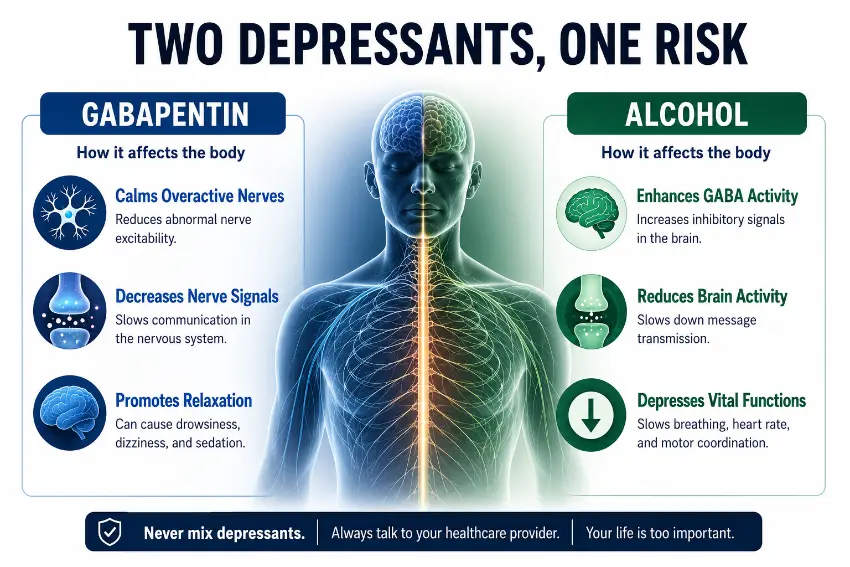
Gabapentin calms overactive nerve signals in the brain, which is why it’s prescribed for seizures, nerve pain, and shingles-related discomfort. Alcohol does something similar in a less controlled way, slowing brain activity and impairing coordination and judgment. When both substances are active in your system at once, their sedating effects don’t just add together, they can compound each other.
Even a small amount of alcohol can intensify gabapentin’s side effects, such as dizziness, drowsiness, and slowed reaction time. How strongly this affects you depends on several factors:
- Your gabapentin dosage
- How much alcohol you drink and how quickly
- Your age, kidney function, and overall health
- Whether you’re taking other medications, especially opioids, benzodiazepines, or other sedatives
Because these variables differ so much from person to person, there’s no dose of alcohol that’s considered universally “safe” alongside gabapentin.
What Happens When You Mix Gabapentin and Alcohol in Your Body?
To understand the risk, it helps to know what each substance is doing on its own before they’re combined.
Gabapentin works by binding to a specific site on nerve cells, which reduces the release of chemicals in the brain that cause overactive nerve signaling. This is what makes it effective for seizures and nerve pain, but it also produces a calming, sometimes sedating effect on the central nervous system.
Alcohol affects the brain differently, but with a similar end result. It enhances a calming brain chemical called GABA while suppressing glutamate, an excitatory chemical. The net effect is slowed thinking, poor coordination, and reduced alertness.
When you combine gabapentin with alcohol, both substances are pulling your central nervous system in the same direction. In short-term, this can mean:
- Sudden, intense drowsiness that comes on faster than expected
- Trouble thinking clearly or following a conversation
- Slower reflexes, which raises the risk of falls, accidents, and injuries
- Nausea or vomiting, especially at higher doses of either substance
The danger is that this interaction can be unpredictable. Someone might tolerate the combination without issue one night and experience severe impairment the next, depending on how much they drank, how much gabapentin is in their system, and how their body processes both.
Side Effects of Mixing Gabapentin and Alcohol
Some side effects of combining gabapentin and alcohol are uncomfortable but not life-threatening. Others require immediate medical attention. Knowing the difference matters.
| Common Side Effects | Serious Side Effects |
| Drowsiness and fatigue | Respiratory depression (slow, shallow breathing) |
| Dizziness or lightheadedness | Severe confusion or disorientation |
| Blurred vision | Loss of consciousness |
| Poor coordination | Increased risk of falls, especially in older adults |
| Slurred speech | Overdose |
| Difficulty concentrating | Accidents and serious injuries |
The FDA has warned that serious breathing difficulties may occur in patients using gabapentin who have respiratory risk factors, including the use of other drugs that depress the central nervous system. Alcohol falls squarely into that category. If you or someone you’re with shows signs from the serious side effects list, this is a medical emergency, not something to wait out at home.
Why This Combination Turns Dangerous, Not Just Uncomfortable
Drowsiness and dizziness are the mild end of this interaction. The real danger lies in what happens when gabapentin and alcohol are combined repeatedly, in higher amounts, or alongside other substances.
1. Overdose risk increases.
The FDA has specifically warned about the risk of respiratory depression and overdose when gabapentin is combined with alcohol or other central nervous system depressants. Because both substances slow breathing, your body can lose the natural drive to keep breathing at a safe rate.
2. Everyday activities become riskier.
Driving, operating machinery, or even walking down stairs becomes far more hazardous when two depressants impair your coordination and reaction time at once.
3. Older adults face a steeper risk.
As people age, the body clears medications more slowly, and balance issues become more common. A fall caused by gabapentin and alcohol together can lead to fractures or head injuries that take much longer to recover from.
4. Combining with opioids or benzodiazepines multiplies the danger.
If gabapentin, alcohol, and a third depressant like an opioid or benzodiazepine are all in your system, the risk of fatal respiratory depression rises sharply. This three-substance combination is one of the patterns clinicians watch for most closely.
5. Long-term use compounds the damage.
Repeatedly mixing these substances can place ongoing strain on the liver and kidneys, worsen mood symptoms, and make it harder to break the cycle of dependence on either substance.
How Long After Taking Gabapentin Can You Drink Alcohol?
There’s no single, universal waiting period that applies to everyone. Gabapentin’s effects and how long it stays active in your body depend on a mix of personal factors, so it’s misleading to give one number and call it safe for all readers.
Instead, consider what actually shifts this timeline for you:
- Dosage – Higher doses take longer to clear from your system than lower ones.
- Kidney function – Gabapentin is processed almost entirely by the kidneys, so reduced kidney function means the drug lingers longer.
- Age – Older adults typically metabolize medications more slowly, extending how long gabapentin remains active.
- Formulation – Immediate-release gabapentin clears differently than extended-release versions like Gralise or Horizant.
- Frequency of use – If you take gabapentin multiple times a day, it may not fully clear between doses, meaning there’s rarely a moment when it’s completely out of your system.
Because of this variability, the safest approach is to follow your prescribing doctor’s specific guidance rather than relying on a general rule you’ve seen online. If you’re unsure, ask your provider directly, this is exactly the kind of question they expect and want to answer.
Does Gabapentin Help With Alcohol Withdrawal?
Gabapentin does have a role in alcohol use disorder treatment, but it’s important to understand the full picture rather than just the headline.
Gabapentin is not FDA-approved for treating alcohol use disorder or alcohol withdrawal, but it is used off-label to support this process. Research published in JAMA Internal Medicine found that gabapentin was effective at increasing the number of days without heavy drinking and improving total abstinence, particularly among people who had more pronounced alcohol withdrawal symptoms. In some outpatient settings, it has also been studied directly against benzodiazepines like lorazepam for managing withdrawal.
Clinical Perspective from Dr. Ash Bhatt:When I prescribe gabapentin for a patient in early alcohol recovery, it’s almost always to help with symptoms like insomnia, anxiety, or lingering cravings, not to manage severe, high-risk withdrawal on its own. For patients who have heavily and over long periods of time abused alcohol, I still depend on a medically monitored setting where we can detect seizure and if necessary, utilize benzodiazepines. Gabapentin is often one of those tools that help us, but it does not replace the level of care that we refer to. |
This distinction matters. Gabapentin may genuinely help someone reduce cravings or manage mild withdrawal symptoms during early sobriety. But treatment with gabapentin does not mean it’s safe to continue drinking; the medication is meant to support the transition away from alcohol, not to be combined with it.
Anyone with a history of heavy drinking, prior withdrawal seizures, or delirium tremens should be evaluated for medical detox rather than attempting to manage withdrawal with gabapentin alone.
Who Faces the Highest Risk When Combining Gabapentin and Alcohol?
While anyone taking gabapentin should avoid alcohol, some groups face a meaningfully higher risk of serious complications:
- Older adults, who process medications more slowly and are more prone to falls
- People with kidney disease, since gabapentin is cleared through the kidneys and can build up to unsafe levels
- People with liver disease, which affects how the body handles alcohol and related toxins
- Individuals with respiratory disorders, including COPD and sleep apnea, who are already more vulnerable to slowed breathing
- People taking opioids, where the combined depressant effect on breathing is especially dangerous
- People taking benzodiazepines, another CNS depressant that compounds the sedating effect
- Individuals with alcohol use disorder, who may be more likely to combine substances or drink in larger amounts
- People taking multiple sedating medications, such as sleep aids or certain antihistamines, alongside gabapentin
If you fall into one or more of these categories, it’s worth having an honest conversation with your prescriber about your drinking habits, even if they feel minor or infrequent.
What Should You Do If You’ve Already Mixed Gabapentin and Alcohol?
If you or someone you know has combined gabapentin and alcohol, the priority is safety, not panic.
- Stop drinking alcohol immediately. Don’t have “one more” to see how it feels.
- Avoid driving or operating machinery for the rest of the day, even if you feel only mildly affected.
- Don’t stay alone. Have someone with you who can monitor how you’re feeling and respond if symptoms worsen.
- Track your symptoms. Note how you’re feeling and whether things are improving or getting worse over the next few hours.
What Dr. Ash Bhatt Has to Say:I tell patients and families the same thing every time: don’t try to wait out serious symptoms at home. If someone is having trouble breathing, can’t be woken up, is having a seizure, or has lost consciousness, that is a health emergency. Dial 911 in these cases. The truth is, it is always safer to be checked and told that you are fine, rather than expecting that things will get better by themselves. |
Watch closely for these warning signs, which require emergency medical attention:
- Difficulty breathing or slow, shallow breaths
- Unresponsiveness or inability to wake the person
- Seizures
- Loss of consciousness
- Bluish tint to the lips, fingers, or skin
When Should You Seek Professional Help?
An occasional slip is different from a pattern. If you’re noticing any of the following, it may be time to look at professional support rather than trying to manage things on your own:
- You find yourself drinking even though you know it’s dangerous with your medication
- You’ve tried to cut back on alcohol and haven’t been able to
- You’re combining gabapentin with alcohol to relax, sleep, or cope with stress
- You’ve experienced withdrawal symptoms when you try to stop drinking
- A loved one has expressed concern about your alcohol use or medication habits
These signs often point to a deeper issue with alcohol dependence or misuse of prescription medications, and both deserve real treatment rather than willpower alone. Depending on your history, this may mean medical detox to safely manage withdrawal, followed by residential or outpatient rehab, individual therapy, and an aftercare plan to support long-term recovery. Misusing medications like gabapentin alongside alcohol can also point to a broader pattern of prescription drug addiction that benefits from the same level of structured, clinical support.
At Legacy Healing NJ, our team offers medically supervised care for alcohol detox in New Jersey, including 24/7 monitoring, comfort medications, and a plan that carries you into ongoing alcohol rehab in New Jersey once you’re stable. You don’t have to figure this out alone, and reaching out isn’t a sign of failure, it’s the first real step toward feeling like yourself again.
Conclusion
Mixing gabapentin with alcohol isn’t something minor that you can easily forget, Both depress the central nervous system, but there are also no sure safe amounts that you can drink without risking the medication, regardless of the dosage or how long you’ve been on the drug.
Because of this, if you are on gabapentin, it is wisest to consult your healthcare provider about drinking alcohol, to be completely open with them on what you normally drink. And if you just find it so hard to stop drinking after knowing the health risks of drinking in general, then perhaps it’s better to take it seriously and seek help rather try to handle it by yourself.
If you or someone you love is struggling to control alcohol use, our team at Legacy Healing NJ would love to support the first move with you to a life that is both risk-free and safe.