


-
 Written By:
Ash Bhatt, M.D., M.R.O., FASAM
Written By:
Ash Bhatt, M.D., M.R.O., FASAM -
 Edited By:
Phyllis Rodriguez, PMHNP-BC
Edited By:
Phyllis Rodriguez, PMHNP-BC
-
 Clinically Reviewed By:
Dr. Ash Bhatt, MD, MRO
Clinically Reviewed By:
Dr. Ash Bhatt, MD, MRO
Key Takeaways
- Most relapses I see don’t start with cravings. They start with a patient testing whether “just once” will feel different, which is precisely what naltrexone is built to block.
- The scariest relapses involve fentanyl. Tolerance drops so fast on naltrexone that a dose a patient once handled easily can become fatal within weeks of stopping treatment.
- A prescription alone doesn’t fix recovery. Patients quit naltrexone the moment they felt stable, only to relapse because therapy never caught up to the medication.
If you or someone you love has been prescribed naltrexone, or you’re weighing it as an option for alcohol or opioid addiction, chances are you need more than a 5-minute appointment with a doctor.
Naltrexone is FDA-approved medication for the treatment of both alcohol use disorder and opioid use disorder. Its mode of action differs from those drugs that people typically associate with the term “addiction treatment”.
In this article, we’ll walk through exactly how naltrexone works in the brain, who it’s appropriate for, what the side effects and safety precautions actually look like, and where it fits alongside fentanyl and opioid recovery specifically.
What Is Naltrexone?
Naltrexone is a type of opioid receptor antagonist. In simple terms, rather than activating them, the medication actually blocks opioid receptors in the brain, which is exact opposite of what opioids and alcohol do. This is probably one of the fundamental reasons why naltrexone is distinct from medicines like methadone or buprenorphine that function by partially or fully activating those very same receptors.
There are two products available:
- Ordinary naltrexone, 50 mg tablet taken once per day;
- Extended-release injectable naltrexone, administered every 30 days, that gives the benefits of naltrexone for about a month, as specified in FDA guidelines.
Naltrexone should not give rise to addiction, the reason is it does not cause any rush of pleasure feeling, it doesn’t stimulate the pleasure centers in the brain, and it is not possible to get physiologically dependent on it by using it, which is unlike the cases with the drugs it is being prescribed against.
How Does Naltrexone Work for Addiction?
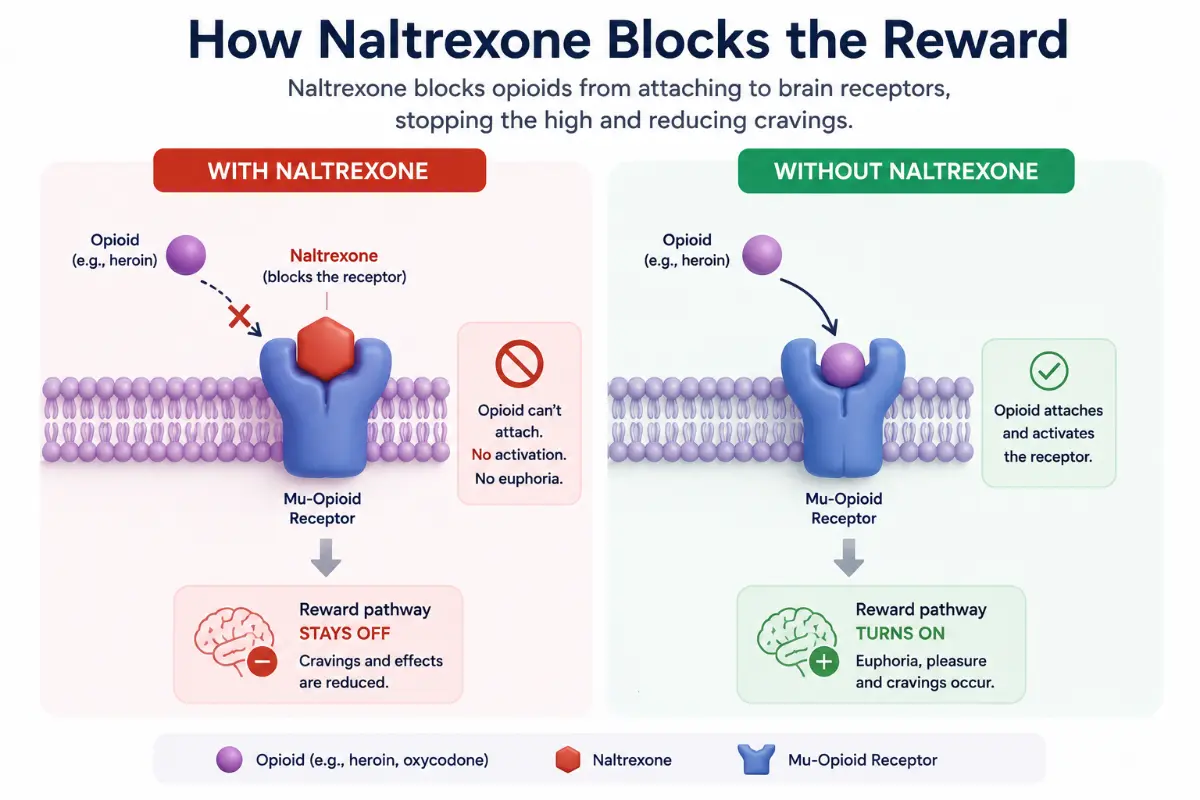
To understand how naltrexone helps in addiction, you have to know naltrexone’s effects at receptor level. The brain has opioid receptors, the mu-opioid receptor, which are the places where opioids attach when they cause pain relief, sedation, or a euphoric feeling.
Naltrexone attaches to these receptors first, but instead of stimulating them, it just stays there and gets in the way of everything else.
This method is known as competitive antagonism and this is how it works in practice:
- If someone uses an opioid while naltrexone is active, the opioid can’t reach the receptor
- Without that connection, the usual high or pain relief doesn’t happen
- Without the high, the brain has nothing to reinforce, so the urge to keep using starts to fade
One more thing worth knowing: naltrexone does nothing for withdrawal. It blocks receptors, it doesn’t calm them, so it offers zero relief from the physical symptoms of coming off opioids or alcohol. That’s why patients complete detox and stabilize first, then start naltrexone after.
Naltrexone for Alcohol Use Disorder
The effects of alcohol addiction on the mental functioning of a person can’t be attributed to mere psychological factors alone. Besides that, the ingestion of alcoholic drinks results in the brain’s reward area experiencing a release of beta-endorphins, which are the body’s own opioids. NIAAA’s Alcohol Treatment Navigator points out that such endorphin secretions are the biggest reason why drinking is a pleasure for those on board and why many heavy drinkers often report craving as nothing but compulsion rather than a willful choice.
Naltrexone is one of the drugs which can be used in breaking down this whole cycle. It prevents opioid receptors from being activated either by natural production or externally administered opioids. It basically reduces the reward-related impulse or motivation to the point where you would hardly consider having another drink versus simply feeling less thirsty after drinking it.
The clinical evidence supports this fact:
- A 2022 systematic review in the journal Addiction found that injectable naltrexone reduced heavy drinking days by nearly two days per month when treatment continued past three months, a benefit that wasn’t statistically significant in shorter courses.
- NIAAA’s own COMBINE study similarly found that naltrexone, paired with structured medical management sessions, improved total abstinence and reduced relapse to heavy drinking compared to placebo.
Oral naltrexone is usually the best choice for patients who are consistent in taking a pill and are interested in being closely involved in controlling their treatment. The injected form takes away the daily decision to take a pill, which works really well for patients who desire changes quite often or who are not good at taking a pill regularly.
Neither version is a standalone fix, and where naltrexone is best used is also determined by the extent of the alcohol use disorder, relapse history, and even if someone is drinking because of another medical condition at the same time. A patient who is drinking heavily will definitely require a different treatment strategy compared to someone who is consuming alcohol every day to avoid withdrawal symptoms between doses.
Naltrexone for Opioid and Fentanyl Addiction
Naltrexone manages opioid and fentanyl addiction by mainly preventing relapse, not by treating the addiction. After it’s active in the body, it prevents opioids from binding by blocking their receptors, so the person can no longer feel the high, which in turn removes the pleasant reinforcement that causes one to use the drug again and again.
But, it’s a completely different with buprenorphine and methadone which act as opioid agonists by partially or fully activating the same receptors which make them useful in managing withdrawal and cravings. Naltrexone will have no impact on withdrawal symptoms, which is why it is very critical to give time between the last opiate use and naltrexone first dose in that particular medication.
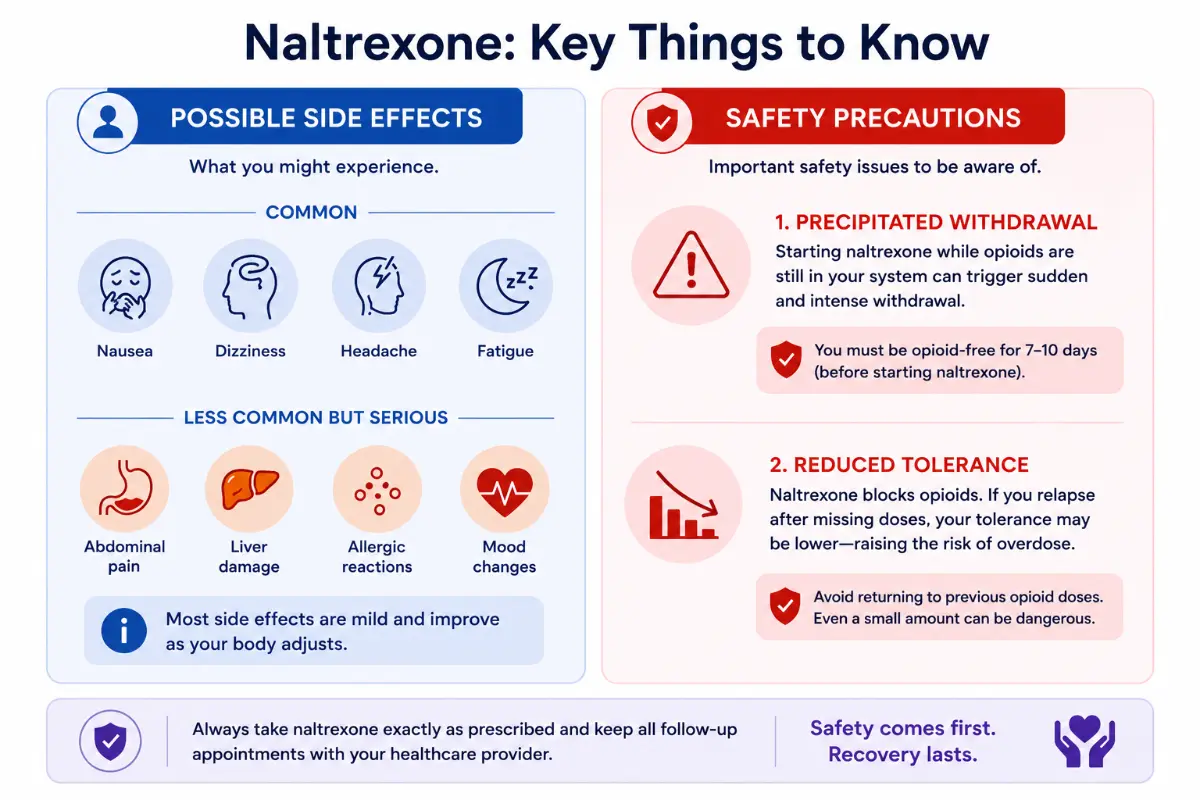
A patient has to be completely opioid-free before starting naltrexone, since introducing an opioid blocker into a system still dependent on opioids can trigger sudden, severe precipitated withdrawal. Majority of medical procedures recommend a period of 7 to 10 days without use of opioids before initiating the first naltrexone dose.
Fentanyl complicates this timeline further. Because fentanyl is fat-soluble and can linger in the body longer than its withdrawal symptoms suggest, someone might feel ready for naltrexone before their body actually is.
Clinical Perspective from Dr. Ash Bhatt:
When a patient is looking to start naltrexone after fentanyl use, I recommend not rely on how they feel. Fentanyl can linger in the body even after when withdrawal symptoms fade, and it can raise a severe reaction because the body hadn’t fully cleared the drug. It’s better to do a urine testing, and sometimes a naloxone challenge, before moving forward with naltrexone treatment.
This caution isn’t just clinical formality. Fentanyl-involved deaths made up the large majority of the roughly 72,776 synthetic opioid overdose deaths reported in 2023, according to NIDA’s overdose tracking data, which is exactly the population naltrexone treatment protocols are built to protect.
Who Can Take Naltrexone?
Naltrexone isn’t right for everyone with an addiction diagnosis, and that’s a good thing, since it means the medication gets used where it actually works.
Good candidates on the alcohol side typically include:
- Adults with moderate to severe alcohol use disorder
- People describing persistent, hard-to-ignore cravings
- Patients with a family history of alcoholism
On the opioid side, naltrexone tends to fit:
- Adults who’ve completed detox and maintained a confirmed opioid-free window of 7 to 10 days
- People who specifically want to avoid taking another controlled substance
- Patients in professions with strict drug-testing policies, where an opioid-based medication like buprenorphine could complicate things
It’s generally ruled out for:
- Anyone with acute hepatitis or liver failure, since the medication is processed by the liver
- Anyone currently using opioids, or relying on them for chronic pain management
- Pregnant patients, handled case by case, since naltrexone is classified as FDA pregnancy Category C and its effects on a developing fetus aren’t fully established
A provider looks at your medical history, current medications, liver function, and recent opioid use before any of this gets decided, and that review shapes which form and dosing schedule makes sense for you.
Naltrexone Side Effects and Safety
It’s worth separating these two things clearly, because they’re not the same conversation. Side effects are what the medication itself can cause in your body. Safety considerations are the precautions around how and when it’s used, especially around opioids.
Common Side Effects
Most people who start naltrexone notice some mild side effects in the first one to two weeks, and for most, they fade as the body adjusts:
- Nausea – The most commonly reported side effect, especially in the first few days of oral naltrexone or right after an injection.
- Headache – It typically resolves within the first week without needing separate treatment.
- Dizziness – Some patients feel lightheaded, particularly when standing up quickly.
- Fatigue – A dip in energy is common early on, and it usually levels out once the body adjusts to the new baseline.
- Injection-site reactions – Specific to the extended-release injectable form, this can mean soreness, redness, or a small lump at the injection site for a few days.
None of this means naltrexone isn’t working, and none of it is a reason to panic. It’s the body adjusting, and for most patients, that adjustment period is short.
Serious Risks
A smaller group of patients run into something more serious, and these are worth knowing even though they’re rare:
- Liver injury is the most studied serious risk, and it’s tied almost exclusively to very high oral doses, in the range of 1,400 to 2,100 mg per week, far above the standard 50 mg daily dose most patients take.
- Severe injection-site reactions go beyond normal soreness and can involve significant swelling, hardening, or tissue damage.
- Allergic reactions range from a mild rash to, in rare cases, anaphylaxis. Sudden swelling of the face or throat, difficulty breathing, or a widespread rash is an emergency.
- New or worsening depression, including suicidal thoughts, has been reported in some patients.
Naltrexone vs. Other Medications for Addiction
Naltrexone is one of several FDA-approved medications used in addiction treatment, and each works through a different mechanism. Here’s how they compare:
| Medication | Primarily Used For | Main Role |
| Naltrexone | Alcohol & opioid use disorder | Blocks opioid receptors, reducing reward and cravings |
| Buprenorphine | Opioid use disorder | Partial opioid agonist that eases withdrawal and cravings |
| Methadone | Opioid use disorder | Full opioid agonist that reduces withdrawal and cravings |
| Acamprosate | Alcohol use disorder | Helps stabilize brain chemistry to support abstinence |
| Disulfiram | Alcohol use disorder | Produces an unpleasant reaction if alcohol is consumed |
The table tells you what each medication does, but not which one fits a given situation. A few quick distinctions help with that:
- Naltrexone suits patients who want a non-opioid, non-addictive option for either alcohol or opioid use disorder and can commit to a confirmed opioid-free window before starting.
- Buprenorphine or methadone tend to fit patients who need active help managing withdrawal and ongoing cravings from opioid dependence.
- Acamprosate is often the better call for patients with liver concerns, since it’s cleared through the kidneys rather than metabolized by the liver.
- Disulfiram works best for patients who respond to accountability through an immediate, unpleasant physical reaction rather than a medication that works quietly in the background.
According to SAMHSA’s guidance on substance use treatment, no single medication outperforms the others across the board, which is why this decision is made individually rather than by default.
What to Know Before Starting Naltrexone
Starting naltrexone well sets the tone for how the rest of treatment goes. A few practical points make the difference between a smooth start and a dangerous one:
- Tell your provider about any current or recent opioid use, even occasional or small amounts, since this determines timing and safety.
- Provide a complete list of current medications and supplements, since some interact with naltrexone or with the opioid-free requirement itself.
- Follow the prescribed dose and schedule exactly, without adjusting the timing or amount on your own.
- Never assume naltrexone makes opioid use safer, since attempting to override the blockade with higher doses can cause a fatal overdose.
- Keep every follow-up appointment, since liver function and overall response are typically monitored through bloodwork over time.
It also helps to know that naltrexone doesn’t create physical dependence, so if it turns out not to be the right fit, a provider can adjust or stop it without a withdrawal process, a flexibility that agonist medications like methadone don’t offer in the same way.
Getting Professional Help for Addiction
Naltrexone can be a genuinely effective tool, but it’s rarely the whole answer on its own. A comprehensive treatment plan usually combines medication with several other pieces working together.
That typically includes a full medical assessment, detox when it’s medically necessary, ongoing medication management, individual therapy, structured behavioral therapies, relapse-prevention planning, and continuing care after the initial treatment phase ends.
What Dr. Ash Bhatt Has to Say:
Naltrexone is a game-changer for patients who feel stuck between wanting to stop and fearing they can’t. But the medication quiets the reward; it doesn’t rebuild the coping skills, relationships, or routines that addiction disrupted. That part still comes from therapy, structure, and support, which is why a full treatment plan is better than a prescription alone.
At Legacy Healing NJ, naltrexone is offered as part of a broader medication-assisted treatment approach that includes residential and outpatient levels of care, individual therapy, and ongoing support for both alcohol and fentanyl-related recovery. Our clinical team also works closely with patients managing co-occurring conditions through our dual diagnosis program, since addiction rarely shows up without something else going on underneath it. You don’t have to figure out whether naltrexone is right for you alone, and reaching out for that conversation is often the first real step forward.
Conclusion
Naltrexone works differently from most addiction medications people have heard of, blocking reward instead of easing withdrawal, and that difference is exactly what makes it useful for the right patient at the right stage of recovery.
If you’re weighing naltrexone for yourself or someone you love, the safest next step is a real conversation with a provider who can look at the full picture. Our team at Legacy Healing NJ is available to walk through what that looks like for your specific situation.