


-
 Written By:
Alex Herrera
Written By:
Alex Herrera
-
 Edited By:
Phyllis Rodriguez, PMHNP-BC
Edited By:
Phyllis Rodriguez, PMHNP-BC
-
 Clinically Reviewed By:
Dr. Ash Bhatt, MD, MRO
Clinically Reviewed By:
Dr. Ash Bhatt, MD, MRO
Key Takeaways
- Confidence Is a Bigger Relapse Risk: The relapses mostly happen because of overconfidence. People begin to feel pretty stable, they take a couple of breaks from the recovery session and so when the cravings kick in, they already have broken the safety net to such an extent that not even their will may help them anymore.
- Happy Events Can Trigger Relapse: A wedding can trigger relapse just as easily as a divorce. I explain to my patients how both happiness and grieving cause one to lose one’s guard, and in both cases it’s the routine that gets disturbed.
- The Real Trigger Is Often a Symptom: Almost always, an underlying symptom of anxiety or depression (or the aftermath of trauma) lives there in people even before they have returned to the substance use, which secretly feeds the desire even before people call it a relapse.
If you’re asking why do people relapse even when they genuinely want to stay sober, you’re asking a more useful question than most people start with. Relapse isn’t about weak willpower, and it rarely happens because someone simply decided to use it again.
In this article, we will explore the psychological, environmental, and biological aspects of what may make relapse an issue, the potential red flags that will alert before a relapse can actually happen, and the practical steps to reduce the chances of a relapse at each and every level of your recovery.
Why Do People Relapse?
Relapse almost never comes down to a single cause. It’s usually the result of several factors converging at once, unresolved stress, an untreated mental health symptom, a change in daily structure, that build on each other until using feels like the only way to get relief. This is why relapse can happen to someone six weeks out of treatment or six years into sobriety.
The brain changes that come with addiction don’t disappear the moment substance use stops. They influence how a person responds to stress, reward, and craving long after detox is complete, which is part of why dual diagnosis and other underlying conditions play such a large role in relapse risk. The elements like emotional triggers, environmental cues, psychological patterns, as well as the biological changes in brain’s reward system work together. So, knowing what is making these changes to the individual is normally more beneficial from a therapeutic point of view than seeing relapse as one single event.
Is Relapse a Sign That Treatment Failed?
Relapses happen quite often, that’s why recovery doesn’t normally proceed as a single straight line from detoxification until lifelong sobriety. National Institute on Drug Abuse states that substance use disorder relapse rates range between roughly 40 to 60%, this is actually a relapse rate for addiction that matches other chronic diseases like hypertension and asthma.
“No one tells someone with a high blood pressure diagnosis that his/her health numbers are higher just because of the illness, then calls treatment as a failure; the same reasoning is true when a person relapses into addiction.”
A relapse is more accurately read as a signal that something in the treatment plan needs to be reassessed, not as proof that the person or the program failed. It might mean a coping skill needs reinforcing, a therapy schedule needs to be more frequent, or an underlying mental health condition needs closer attention. Viewing relapse this way changes what happens next: instead of shame keeping someone from calling for help, the relapse becomes the reason they reach out sooner.
10 Common Reasons People Relapse
Addiction relapse rarely has one single trigger. These ten causes are the ones we see most often in clinical practice, and most people who relapse can usually point to two or three of these overlapping at the time it happened.
1. Stress and Poor Coping Skills
Common relapse triggers that we are most often dealing with are daily stress, work pressure, and financial problems. They are mainly the sources because of which these situations are building up gradually and not always creating a situation where an individual is in a real big rush, or feels that it is so important, he or she needs to do something about it.
As a result, when a person reaches a state of severe emotional exhaustion, a person can start perceiving a substance not only to end feeling that way but also as a very quick way to relieve that situation.
One of the most obvious methods to avoid this situation is to develop more effective coping strategies, before a catastrophe, not during it!
2. Returning to Old People, Places, and Habits
Triggering factors related to the environment are so powerful as those are closely connected to memories. When you come close to a place where you have spent most of your time in the past, or when you start following a well-known habit which leads you back to those moments of old, all of these might generate an intense desire without giving a person the opportunity to mentally prepare for it.
High-risk scenarios for some people can be as ordinary as a specific street, a certain time of night, or a social circle that never fully supported the recovery in the first place.
3. Untreated Mental Health Conditions
Depression, anxiety, PTSD, and other mental health conditions frequently exist alongside substance use disorder, and when they go untreated, the original reasons someone used substances to cope are still there. This is one of the most overlooked reasons for why do people relapse on drugs even after completing a full treatment program.
Clinical Perspective from Dr. Ash Bhatt:
If someone is referred to me following a relapse, usually one of the first things we look at jointly is whether their depression, anxiety, or trauma symptoms were genuinely being treated, not whether they were just being considered as getting better on their own. Because treating both conditions side by side with each other is what will keep both disorders under control permanently.
4. Overconfidence in Recovery
Feeling stable can be a good sign, but it can also lead someone to believe they no longer need the structure that got them there. Skipping therapy sessions, missing meetings, or letting go of healthy routines often starts small and builds momentum.
This pattern is one reason ongoing outpatient support matters even after someone feels like they’ve “got it handled.”
5. Isolation and Lack of Support
Withdrawing from family, avoiding support groups, and feeling disconnected from other people in recovery removes one of the strongest protective factors against relapse. Isolation doesn’t just remove support, it also removes accountability, which makes it easier to slip back into old patterns unnoticed.
Staying connected to a sober community, whether that’s family, a support group, or an alumni network, consistently correlates with better long-term outcomes.
6. Cravings and Drug Cues
Cravings are a biological response, not a character flaw. The brain’s reward system creates conditioned responses to certain sights, smells, or situations that were once linked to substance use, and exposure to those cues can trigger intense urges even years later. This is part of why understanding cravings, including opioid cravings specifically, is so central to relapse prevention planning.
7. Stopping Therapy or Medication Too Soon
Discontinuing counseling, stopping medication without medical guidance, or losing regular check-ins with a treatment team removes the accountability structure that supports early recovery. This is one of the most common reasons for why do people relapse after rehab, because the intensity of support drops sharply the moment structured treatment ends.
8. Major Life Changes
Divorce, job loss, moving, grief, and even happy events like a wedding or a promotion can all trigger relapse. Both positive and negative life changes disrupt routine and increase emotional intensity, and either one can be enough to reactivate old patterns if new coping skills aren’t in place yet.
9. Poor Self-Care
Lack of sleep, poor nutrition, physical exhaustion, and burnout wear down the same resilience that helps someone resist cravings. Recovery isn’t only about avoiding substances, it’s also about maintaining the physical foundation that keeps stress and mood manageable day to day.
10. Not Having a Long-Term Recovery Plan
Aftercare, alumni programs, ongoing therapy, and a written relapse prevention plan give structure to the months and years after treatment ends. Without one, people are more likely to face high-risk moments without a clear plan for how to respond, which is exactly what a strong aftercare program is designed to prevent.
Can Someone Relapse After Years of Sobriety?
Yes, and this surprises a lot of people who assume relapse risk disappears after enough time passes. Recovery requires ongoing maintenance, and life events, a death in the family, a health diagnosis, unexpected financial stress, can reactivate cravings even after long stretches of sobriety.
This doesn’t mean relapse after years of sobriety is inevitable. It means recovery is a lifelong process rather than a finish line, and the coping tools built early on need to stay active, not shelved once things feel stable.
Early Warning Signs of Relapse
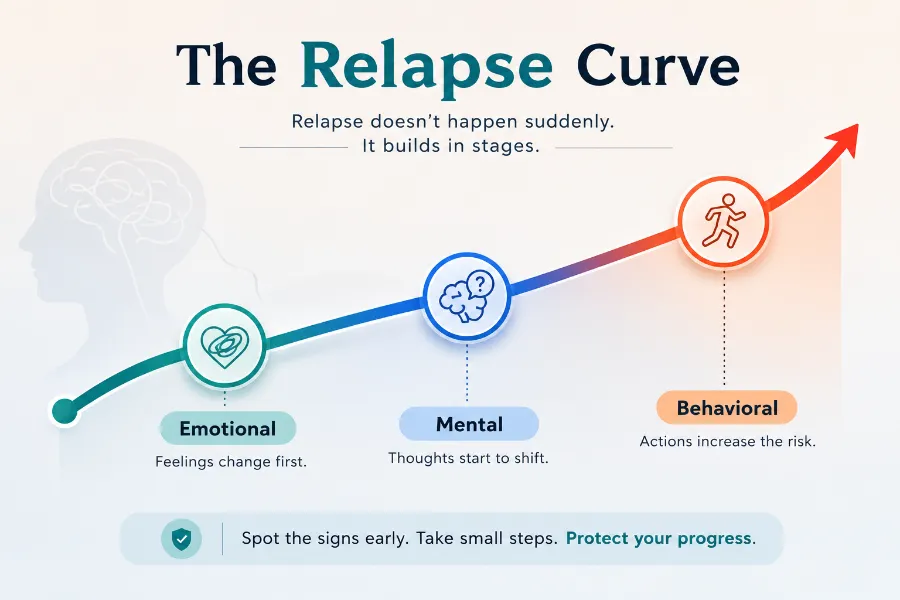
Relapse rarely happens without warning. It typically moves through three stages, and recognizing them early is one of the most effective forms of relapse prevention.
- Emotional signs are usually the earliest, and that’s exactly why they’re easy to miss.
- Irritability tends to build gradually, so a person starts snapping at small things without connecting it to anything specific.
- Mood changes work the same way, someone who was previously steady begins swinging between low motivation and restlessness within the same week.
- Anxiety often rises alongside both
- Mental signs follow, and they involve the mind starting to negotiate with itself:
- Romanticizing past substance use is one of the clearest signs here, a person starts remembering only the relief a substance provided.
- Bargaining shows up closely behind that, often disguised as reasonable-sounding thoughts like believing one drink won’t undo months of progress.
- Persistent cravings intensify during this stage too, because the brain’s reward system is responding to stress the same way it always has.
- Behavioral signs are the most visible, which is also why they tend to appear last.:
- Skipping meetings or therapy sessions is often the first outward sign, usually justified with a reasonable excuse like being too busy or too tired that week.
- Withdrawal and isolation deepen around the same time, as the person pulls away from family and friends.
- Reaching out to former using friends is typically the final behavioral sign before relapse
Clinical Perspective from Dr. Ash Bhatt:
When I meet with a patient who’s relapsed, I’m rarely surprised by the substance use itself. It’s always about the details of those 2 weeks beforehand that I need to know. It is eitherr the person has dropped out of support groups, or is getting less rest, or has quietly distanced themselves from the support network. Early detection of a trend like that gives us quite a chance to prevent a relapse entirely by taking suitable measures.
How to Reduce the Risk of Relapse
Preventing relapse comes down to consistency, not perfection. The following strategies form the core of most relapse prevention plans we build with patients:
- Follow your treatment plan even when things feel stable
- Attend therapy consistently, not just during high-stress periods
- Build a sober support network you can actually call on
- Identify your personal triggers before you’re standing in front of one
- Develop healthy coping skills for stress, boredom, and conflict
- Prioritize sleep, nutrition, and physical activity
- Keep a written relapse prevention plan you can return to
- Reach out for help the moment early warning signs appear, not after
None of these strategies need to be perfect to be effective. The goal is to build enough structure that a single high-risk moment doesn’t turn into a full return to substance use.
When Should You Seek Professional Help?
Relapse risk isn’t always obvious in the moment, especially when someone is trying to convince themselves everything is still under control. The following signs are the clearest indicators that it’s time to reach out for professional support, rather than trying to manage things alone:
- Cravings that are increasing in frequency or intensity, rather than fading with time
- Repeated close calls, such as attending a high-risk event, holding a substance, or being minutes away from using
- Any return to substance use, even a single use or a small amount
- Untreated or worsening mental health symptoms, including anxiety, depression, or trauma responses that feel harder to manage than before
- A growing sense of losing control, where daily routines, responsibilities, or relationships are starting to slip
- Isolating from support systems, including skipping therapy, meetings, or check-ins that were previously part of the routine
- Romanticizing past use or actively bargaining, such as telling yourself one time won’t undo months of progress
What Dr. Ash Bhatt Has to Say:
I tell my patients this often: you don’t need to wait until you’ve fully relapsed to call us. If you’re having repeated close calls, or you notice the same warning signs building again, that’s exactly the moment to reach out. Early intervention at that stage can prevent months of setback later.
How Legacy Healing New Jersey Supports Long-Term Recovery
At Legacy Healing NJ we help people achieve long-term recovery by providing medical detox, residential rehab, and dual diagnosis treatment for patients who have co-occurring mental health conditions. From there, individual and group therapy, family involvement, and structured outpatient treatment help patients build the skills that carry them through the highest-risk period after formal treatment ends.
Aftercare planning and ongoing alumni support extend that structure well past discharge, as recovery continues to be a major focus even after a program is complete.
Conclusion
Relapse is not a random outcome but rather a result of identifiable factors. Examples may include stress, neglected mental disorders, loneliness, major life changes, or a reward system that can’t forget the old pattern overnight. However none of these reasons imply a lack of willpower on the part of the person, nor does it mean that the treatment has failed.
If you yourself or someone close to you is experiencing a relapse, our team at Legacy Healing NJ is here to help build a plan that actually holds up under real-life pressure.