

-
 Written By:
Christina Holmes
Written By:
Christina Holmes -
 Edited By:
Phyllis Rodriguez, PMHNP-BC
Edited By:
Phyllis Rodriguez, PMHNP-BC
-
 Clinically Reviewed By:
Dr. Ash Bhatt, MD, MRO
Clinically Reviewed By:
Dr. Ash Bhatt, MD, MRO
Prescription medications are some of the most effective tools in modern medicine. When properly used, they alleviate pain, keep mood stable, lessen anxiety, and generally make one’s life better. Still, drug dependence might occur even when an individual is taking the medication as per the doctor’s orders and at the doses recommended by them. It is caused via changes in the individual’s biology instead of behavior and by the time most of the people discover it, they have probably already attempted quitting at least once without success.
Rehab is the last option after those attempts have failed, when the withdrawal symptoms pose a risk to the person’s health, or when a mental health condition has led to the person’s instability so much that they cannot live without support from others.
In this article, we’ll walk through what prescription drug dependence actually is, the seven most important signs to watch for, the medications most commonly involved, and what determines whether professional rehab is the right next step.
Key Takeaways
- It is possible to become dependent even if every dose was prescribed by a healthcare professional. The patients I am most concerned about are those who have never done any misuse, but unfortunately, they were not informed about the possible consequences of long-term use.
- Usually, after a person has already tried to stop for more than twice and gone back to the same pattern, this is the typical clinical point when outpatient treatment alone cannot be relied upon any more and a structured rehabilitation program is safer and more effective.
- Medical supervision is a must during withdrawal from benzodiazepines and opioids due to its life-threatening possibility. Having no supervision during withdrawal is one of the least known ways that recovery fails and results in a medical emergency.
What Is Prescription Drug Dependence?
Prescription drug dependence is a physiological state in which the body has adapted to the presence of a medication and requires it to function normally. This is not the same thing as addiction, though the two can and often do overlap.
Physical dependence refers to what happens when stopping or reducing a medication triggers withdrawal symptoms, the body has recalibrated around the drug’s presence and reacts when it’s removed. Addiction, by contrast, involves compulsive drug-seeking behavior, continued use despite clear harm, and loss of control over use.
Tolerance is a separate concept again. When tolerance develops, a person needs higher doses to achieve the same effect they initially got from a lower dose. Tolerance can precede dependence, but they are not the same process.
One of the most important things to understand about prescription drug dependence is that it can happen without any misuse at all. Prescription drugs can be addictive because they activate the brain’s reward center, which can lead to physical dependence over time, meaning individuals may find themselves needing to increase their dosage to achieve the same effects. That process can unfold even when someone is following their prescriber’s instructions exactly.
7 Signs of Prescription Drug Dependence
Prescription drug abuse signs don’t always look dramatic. They tend to accumulate quietly until a pattern becomes visible. The following signs are the most consistently observed in clinical settings, grouped by presentation.
1. Taking More Medication Than Prescribed
This is often the first observable sign, and it’s frequently minimized by the person experiencing it. They tell themselves they need a little more because their pain is worse today, or the anxiety is especially bad this week. But when higher doses become the baseline, and the prescribed amount no longer feels effective, something has shifted.
Watch for:
- Consistently taking doses beyond what was prescribed
- Running out of a monthly prescription well before the refill date
- Taking medication more frequently than the dosing schedule allows
- Rationalizing increased use as a short-term response to unusual stress
2. Feeling Like You Need the Medication to Function
There’s a meaningful difference between a medication helping you manage a condition and feeling like you can’t face the day without it. When the prescription shifts from something that helps to something that feels necessary for basic functioning, that’s a sign worth taking seriously.
Common experiences in this phase include:
- Daily anxiety or dread around whether you have enough medication
- Feeling physically or emotionally unwell at the thought of missing a dose
- Cravings that feel difficult to distinguish from genuine symptoms
- Organizing daily life around access to the medication
3. Experiencing Withdrawal Symptoms
Prescription drug withdrawal symptoms are one of the clearest clinical indicators of dependence. The specific symptoms vary depending on the medication class, but common ones include:
- Sweating, chills, or fever
- Rebound anxiety or panic
- Insomnia or disrupted sleep
- Nausea and gastrointestinal distress
- Muscle tremors or physical restlessness
- Irritability and mood instability
When someone experiences these symptoms after skipping or reducing a dose, their body is telling them something important: it has adapted to need this substance to maintain equilibrium.
Here’s What Dr. Ash Bhatt Wants To Add:
I want to clarify something that is often misunderstood in clinical settings. Withdrawal symptoms do not mean someone is weak or that they’ve done something wrong. They mean the body has physiologically reorganized around a substance. I’ve had patients in tears because they felt ashamed of needing medical supervision to stop a medication their doctor prescribed.
4. Doctor Shopping or Seeking Early Refills
When someone starts visiting multiple providers to secure additional supplies, or calling the pharmacy before the refill window opens, it is worth to pay attention to such behaviour patterns. It usually reflects an anxiety around access that goes beyond managing a condition.
Signs in this category include:
- Visiting multiple doctors or clinics to obtain additional prescriptions
- Reporting medications as lost or stolen to secure early replacements
- Expressing anger or significant distress when a refill is delayed
- Filling prescriptions at different pharmacies to avoid detection
5. Changes in Mood or Behavior
Mood changes are often the first thing family members notice, and they’re among the most disruptive to relationships and daily functioning.
These changes may include:
- Increased irritability or short-temperedness, especially between doses
- Emerging or worsening depression when medication wears off
- Social withdrawal and reduced interest in activities previously enjoyed
- Difficulty concentrating, remembering, or following through on tasks
6. Responsibilities Begin to Suffer
When a prescription drug has started affecting someone’s ability to meet their obligations at work or financially, the dependence has moved into a territory that typically needs professional evaluation. This sign is often the one that brings families to crisis points.
Common patterns:
- Missing work or arriving impaired
- Academic performance declining
- Financial problems related to medication costs or obtaining supplies
- Persistent conflict in relationships tied to behavior changes
- Withdrawal from social and family commitments
7. Continuing to Use Despite Harm
Perhaps the clearest sign of prescription drug addiction symptoms crossing into addiction territory is when use continues despite known negative consequences. This is compulsive use, and it is a clinical marker that professional intervention is needed.
This looks like:
- Continuing to use despite documented health complications
- Combining medication with alcohol or other substances despite knowing the risks
- Engaging in increasingly risky behavior to obtain or use medication
- Making multiple attempts to cut back or stop, none of which have been sustained
Common Prescription Drugs That Can Lead to Dependence
Not all prescription medications carry the same dependence risk, but four drug classes account for the majority of clinical presentations involving prescription drug addiction symptoms.
- Opioids – Of all the drug groups that get you addicted easier, including oxycodone, hydrocodone, morphine, and fentanyl are the biggest risk-takers. In fact, they rank highest for drugs that can cause dependence. According to SAMHSA’s 2023 National Survey on Drug Use and Health, around 5.3 million people age 12 and older had a past-year substance use disorder involving prescription pain relievers.
- Benzodiazepines – The best-known examples of benzodiazepines or BZDs are probably Xanax (alprazolam), Ativan (lorazepam), Valium (diazepam), and Klonopin (clonazepam). BZDs have a long history of being used as anxiolytic and sleep-inducing drugs; But, they also have a high risk of coming with physical dependence after a few weeks of use. In fact, based on data presented in the same 2023 SAMHSA report, 2. 3 million individuals aged 12 and over nationwide experienced a substance use disorder for tranquilizers or sedatives in the past year. What makes benzodiazepine withdrawal special is that it is the one time that if someone stops the drug suddenly without supervision it often means death due to seizures.
- Prescription stimulants – Adderall, Ritalin, and Vyvanse are prescribed primarily for ADHD but carry meaningful misuse potential, especially for young adults. According to SAMHSA’s 2024 data, about 3. 9 million individuals aged 12 and above had used prescription stimulants nonmedically in the past year.
- Sleep medications – medications like Ambien and Lunesta affect sleep by increasing GABA activity in the brain and are best suited for short-term use only. If someone is taking a certain sleep medication nightly, per their actual prescribed dose, it is possible for dependence to develop in as little as a few weeks. And when the person stops taking the medication, the symptoms of rebound insomnia can occur to such a degree that the individual will feel as if they absolutely cannot do without the medication.
When Does Prescription Drug Dependence Require Rehab?
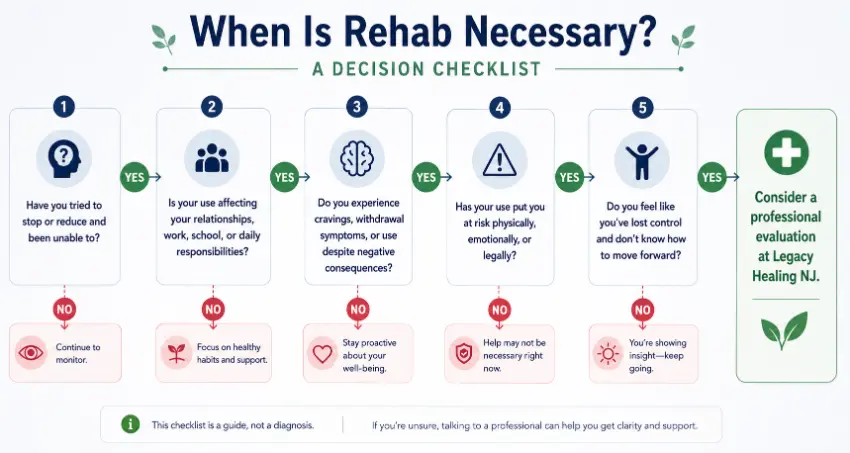
This is the question most people are actually asking when they arrive at articles like this one. The honest answer is that dependence doesn’t automatically require residential treatment, but certain patterns do indicate that professional addiction treatment options and structured care are necessary.
Rehab is typically indicated when:
- Self-managed withdrawal has failed or is medically unsafe. When someone has attempted to stop independently and returned to use, particularly with opioids or benzodiazepines, medically supervised detox is the necessary first step before any further recovery work can begin.
- Withdrawal carries medical risk. Benzodiazepine and alcohol withdrawal can produce seizures. Opioid withdrawal, while rarely fatal directly, can cause serious cardiovascular stress and severe dehydration. Medical supervision is the standard of care in these times.
- Co-occurring mental health conditions are present. According to SAMHSA, 21.2 million adults in 2024 experienced both a mental health disorder and a substance use disorder simultaneously. A dual-diagnosis treatment program addresses both at once, which matters because treating only the dependence while leaving an anxiety disorder or depression unaddressed leaves the underlying driver in place.
- Multiple substances are involved. Polydrug use increases medical complexity and risk significantly, often requiring a higher level of clinical oversight than outpatient management can provide.
- The person has lost control despite wanting to stop.
- For those in central New Jersey, Trenton luxury rehab offers comprehensive prescription drug dependence treatment in a private, supportive setting. This is the core clinical signal. Insight is present, motivation is present, and the pattern continues regardless. That gap between intention and outcome is what structured treatment is specifically designed to close.
Clinical Perspective from Dr. Ash Bhatt:
Something I’ve noticed over years of treating prescription drug dependence is how often the refill timeline tells the story before anything else does. What the body is doing in that gap between the prescription end and the next fill is functionally a mild withdrawal cycle, and the person may not even recognize it like that. They experience it as symptoms returning, pain worsening, and anxiety spiking. Clinically, what I’m often looking at is a physical adaptation that neither the patient nor their prescriber has named it yet. That’s the conversation that determines whether we’re managing a prescription or dependence.
Treatment Options for Prescription Drug Dependence
Effective treatment for prescription drug dependence is a sequence of care levels, each designed to address what the previous stage has made possible. The right entry point depends on the severity of dependence, medical risk factors, and how much structure daily life currently supports.
- Medical Detox is the clinically required starting point for anyone with significant physical dependence, particularly involving opioids or benzodiazepines. It provides monitored withdrawal management, medication support where appropriate, and oversight for complications. At Legacy Healing NJ, detox is the beginning of care, not the goal of it.
- Residential Rehab provides around-the-clock clinical and therapeutic support in a structured environment, separated from the triggers and circumstances that typically sustain use. It’s particularly indicated when home environments are unstable or when the severity of dependence requires more intensive initial stabilization.
- PHP (Partial Hospitalization Program) offers a high level of clinical contact, typically five to six hours daily, while allowing patients to return to sober living in the evenings. It’s often the step immediately following residential care for those who have achieved initial stability.
- IOP (Intensive Outpatient Program) offers a mixture of group therapy, personal counseling, and clinical supervision several times a week. It is ideal for individuals who have been stabilized and are aiming for independent recovery but still want to keep up with work or family activities.
- Therapy is central at every level of care. Therapeutic approaches that have been supported by research, such as Cognitive Behavioral Therapy (CBT), Dialectical Behavior Therapy (DBT), and methods that take trauma into consideration, are used to change the psychological behaviors that often support and maintain symptoms of prescription drug dependence.
- Medication-Assisted Treatment (MAT) entails the use of medications that the FDA has approved, like buprenorphine or naltrexone, to help reduce opioid cravings and withdrawal symptoms, significantly lowering the chance of relapse during the early phase of recovery.
- Aftercare and Continuing Care are designed to make the process of leaving formal treatment gradual rather than sudden. Support from former patients, outpatient therapy, and connections with the community are measures that help over time to lower the risk of relapse.
Can Prescription Drug Dependence Be Treated Successfully?
Yes, and meaningfully so, particularly when treatment begins before dependence has progressed to severe addiction. Recovery from prescription drug dependence is not a rare outcome reserved for certain kinds of people. It is the expectation when someone receives appropriate, individualized care.
Early intervention matters because dependence becomes more neurologically and psychologically entrenched the longer it continues. The body and brain adapt further. Coping strategies narrow. But these processes are also reversible, and comprehensive treatment that addresses both the physical and emotional dimensions of dependence gives people t
he conditions their recovery needs.
If you recognize these signs in yourself or someone you care about, the most useful first step is a professional evaluation to understand clearly what’s happening and what level of support would actually help.
Call Legacy Healing NJ Today
732-402-0352
Available 24/7 for confidential consultation