



-
 Written By:
Alex Herrera
Written By:
Alex Herrera
-
 Edited By:
Phyllis Rodriguez, PMHNP-BC
Edited By:
Phyllis Rodriguez, PMHNP-BC
-
 Clinically Reviewed By:
Dr. Ash Bhatt, MD, MRO
Clinically Reviewed By:
Dr. Ash Bhatt, MD, MRO
Key Takeaways1. Potency Matters: I’ve noticed that 7-OH products have very high concentrations of alkaloids, which are far more potent than typical kratom, which results in more rapid dependence and much more severe withdrawal symptoms among our patients. 2. The “Natural” Illusion: What I find most alarming about natural status and natural marketing is the way it clouds otherwise accurate perceptions about danger. Several patients come to our clinic convinced that kratom is safe because it is sold at gas stations and promoted as a health supplement. 3. The earlier you recognize dependency the more effective treatment can be: In my experience, being able to spot signs of dependency within the first 2-4 weeks of regular use, can help prevent the emotional and behavioral effects connected to chronic use. |
Understanding a Quiet Public Health Conversation
If you’ve walked into a smoke shop or gas station across New Jersey lately, you’ve probably noticed shelves lined with kratom and 7-OH products. They’re marketed as natural wellness solutions, packaged in colorful wrappers with names that sound harmless. But behind the counter and in behavioral health clinics, a different conversation is happening, one about growing dependency, withdrawal concerns, and why addiction specialists are paying closer attention to these products.
New Jersey lawmakers and health officials have also begun discussing regulation and public safety concerns tied to kratom products. According to the U.S. Food and Drug Administration (FDA), kratom products have been associated with serious health risks, including dependency, contamination concerns, and adverse reactions. The National Institute on Drug Abuse (NIDA) additionally notes that some kratom products may produce effects similar to opioids and can lead to withdrawal symptoms with repeated use.
This article isn’t about fear-mongering. It’s about clarity. Whether you’re using these products, supporting someone who is, or simply curious about what’s happening in your community, understanding kratom and 7-OH dependency can help you make informed decisions and recognize when support matters.
What Are Kratom and 7-OH Products, Really?
Kratom comes from the leaves of Mitragyna speciosa, a tropical tree native to Southeast Asia. Traditionally, people chewed the leaves or brewed them as tea. But what’s sold in New Jersey today is often far more concentrated, and that matters significantly.
The active compounds in kratom are alkaloids, with mitragynine and 7-hydroxymitragynine (7-OH) being the primary ones. When manufacturers isolate and concentrate 7-OH specifically, they’re creating a product that’s substantially more potent than traditional kratom powder or leaf. Think of it like the difference between drinking coffee and taking a concentrated espresso shot, the effect profile changes entirely.
Today, kratom products are sold in many forms, including:
- Kratom powder – The least processed form, typically lower potency
- Kratom extracts – Concentrated versions with enhanced alkaloid content
- 7-OH products – Isolated or highly concentrated 7-hydroxymitragynine, marketed with names like “7-OH” capsules or shots
- Blended products – Combinations designed to produce specific effects
Some manufacturers now market concentrated 7-OH products specifically for energy, mood enhancement, relaxation, or pain relief. However, concentrated extracts may increase the risk of dependency, tolerance, and compulsive use patterns.
According to research published by the National Library of Medicine, 7-hydroxymitragynine interacts strongly with opioid receptors, which helps explain why some users report withdrawal symptoms and escalating use over time.
Another issue involves inconsistent manufacturing standards. Because kratom products are not uniformly regulated, potency can vary dramatically between brands and formulations.
This creates a dangerous misunderstanding where individuals assume “natural” automatically means safe. In reality, natural substances can still affect brain chemistry, emotional regulation, and dependency pathways.
Why Addiction Specialists Are Becoming More Concerned
Behavioral health professionals are increasingly seeing patterns of kratom dependency that resemble other substance misuse concerns. While not every person who uses kratom develops addiction-related symptoms, specialists are observing growing numbers of individuals struggling to stop despite negative consequences.
One major concern is tolerance. Over time, some individuals require larger amounts or stronger products to achieve the same emotional or physical effects. This pattern becomes even more concerning with concentrated 7-OH products.
Commonly reported concerns include:
- Increased tolerance over time
- Emotional reliance during stress
- Anxiety or irritability without use
- Sleep disruption
- Difficulty reducing intake
- Withdrawal symptoms after stopping
- Using kratom to cope emotionally
The Centers for Disease Control and Prevention (CDC) has reported increasing calls to poison control centers involving kratom exposure. Meanwhile, the Substance Abuse and Mental Health Services Administration (SAMHSA) continues to emphasize the importance of recognizing emerging substance misuse trends before they escalate into severe behavioral health challenges.
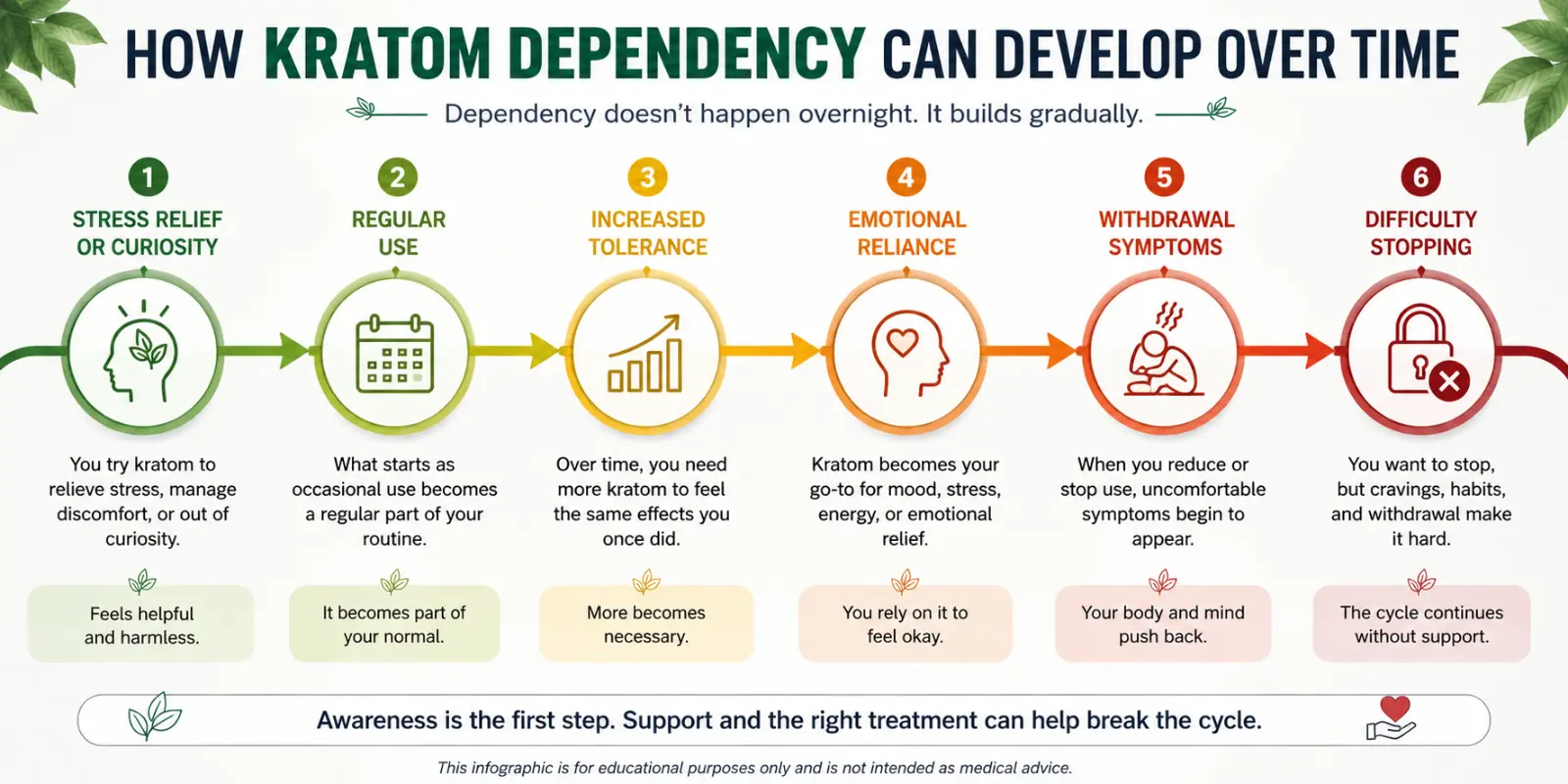
Clinical Observations From Dr. Phyllis Rodriguez, PMHNP-BCIn my practice working in behavioral health and treating for substance misuse, I frequently observe that people tend to underestimate how rapid emotional addiction can be with substances labeled “natural. ” Often people start with kratom products to treat exhaustion or anxiety, clarity of mind or stress management; Next Yet frequent, persistent use may start to hijack mood regulation, sleep or motivation and emotional strength. What I think is dangerous about heavy use of the 7-OH products is that people will keep using while they are getting more and more anxious, irritable and their relationships are suffering because quitting cold turkey is just too hard. |
Why These Products Are Becoming a Growing Concern in New Jersey
New Jersey has unique challenges with kratom and 7-OH accessibility. The products are everywhere, in corner stores in Newark, gas stations on the Turnpike, and dedicated smoke shops in most towns. This ubiquity normalizes use, especially among young adults who may not understand the dependency risks.
Another challenge is the lack of widespread public understanding surrounding 7-OH products. Many consumers are unfamiliar with 7-hydroxymitragynine and may not realize how concentrated some formulations have become.
New Jersey officials have also participated in broader national discussions regarding kratom safety, labeling practices, age restrictions, and product regulation. While laws continue evolving, behavioral health professionals remain focused on awareness, education, and prevention rather than fear-based messaging.
Families across New Jersey are increasingly encountering situations where a loved one experiences:
- Escalating use patterns
- Emotional withdrawal without access to products
- Difficulty sleeping without kratom
- Anxiety during attempts to stop
- Increased secrecy around usage habits
These patterns highlight why kratom risks are becoming a growing behavioral health conversation throughout the state.
Recognizing When Kratom or 7-OH Use Becomes a Problem
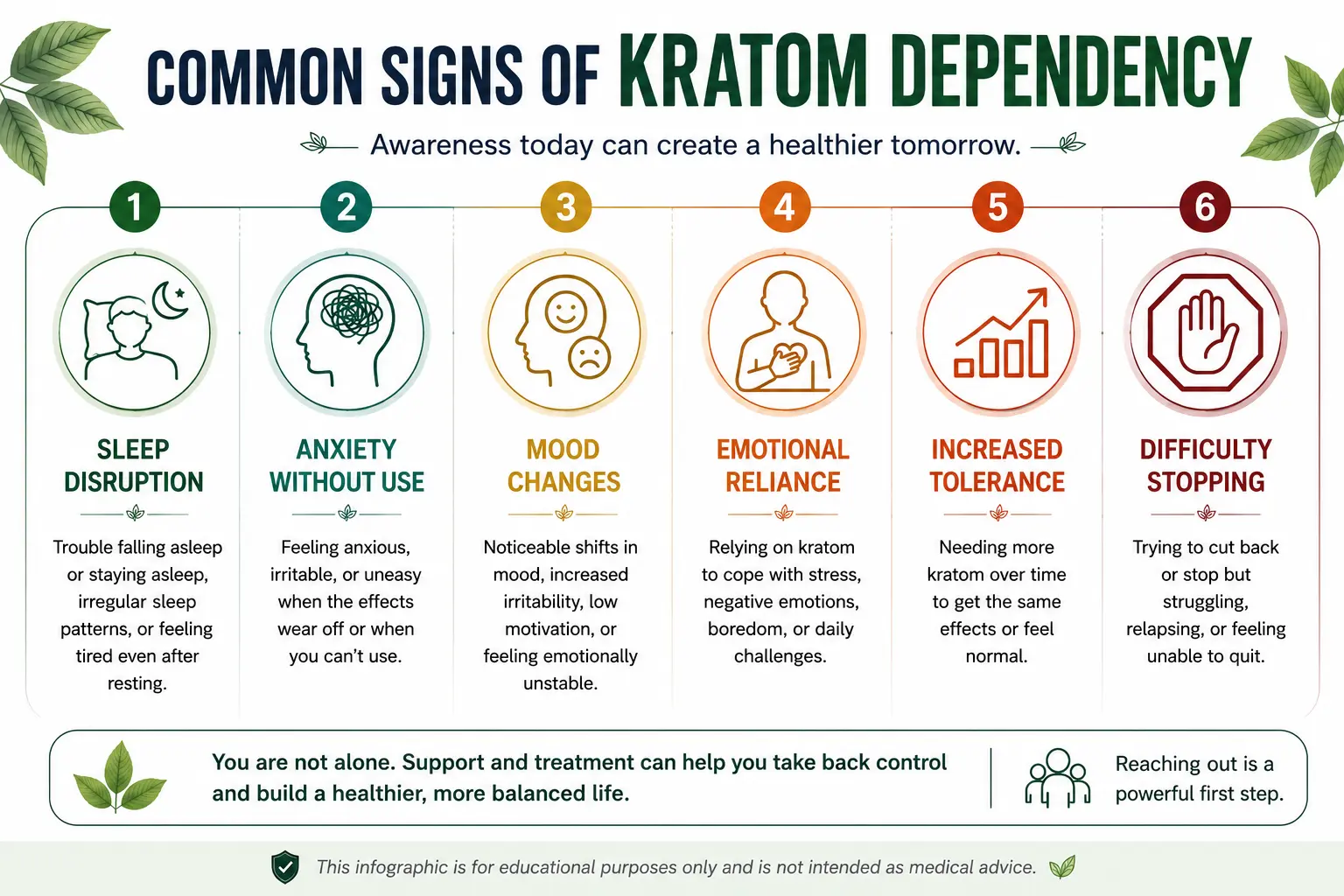
Not everyone who uses kratom develops dependency. But certain patterns suggest use is becoming problematic, making it important to assess honestly, if you come across these potential warning signs:
- Needing larger amounts for the same effect
- Feeling anxious or irritable without use
- Trouble sleeping after reducing intake
- Using kratom products to cope emotionally
- Difficulty stopping despite negative effects
- Mood swings or emotional instability
- Increased isolation or secrecy
- Relying on products to manage daily stress
It is important to approach these signs compassionately rather than judgmentally. Many individuals begin using kratom products while trying to manage legitimate emotional or physical challenges.
Why Early Recognition Matters
From a treatment perspective, identifying these patterns early changes outcomes dramatically. Someone who recognizes dependency after a few weeks of daily use responds better to support than someone who’s developed the habit over months. The longer the pattern persists, the more entrenched both the physical and psychological components become.
What Dr. Ash Bhatt Wants Families to UnderstandAs I tell people on a regular basis, I would advise individuals and families to focus on behavioral indicators rather than on diagnoses. If a person is starting to require a drug to stay emotionally balanced, to sleep well, or to get through daily pressures and demands, it merits attention. Going out for professional help at an early stage is not an overreaction in most cases, since it stop the damage as the dependence escalates. |
Recovery and Support Are Available
Recovery from kratom dependency is possible, especially when individuals receive support that addresses both substance use patterns and underlying emotional health challenges.
Effective treatment addresses three interconnected components: managing acute withdrawal symptoms, rebuilding emotional and stress regulation skills, and treating any underlying mental health conditions that contributed to initial use.
Withdrawal management often involves behavioral health strategies, medical support for specific symptoms, and sometimes transitional medications that support the brain’s adjustment. But the longer-term work is helping patients develop sustainable coping skills for stress, anxiety, or pain without substance dependence.
What Support Looks Like
- Behavioral health counseling – Working with a therapist to understand why kratom use developed and building healthier coping mechanisms
- Individualized treatment approaches – Because dependency develops differently for different people, treatment needs to match your specific situation
- Mental health care – Addressing anxiety, depression, or other conditions that may have contributed to kratom use
- Peer support – Connecting with others navigating similar challenges
- Medical support – Managing withdrawal symptoms and monitoring overall health during transition
At Legacy Healing Center New Jersey, individualized behavioral health treatment approaches help clients better understand dependency patterns while building healthier coping strategies and emotional resilience.
Support Is Here
At Legacy Healing Center, we work with individuals and families navigating kratom and 7-OH dependency with the same comprehensive, compassionate approach we bring to all behavioral health challenges. Our individualized treatment programs address the physical aspects of dependence, the underlying emotional factors contributing to use, and the skills needed for sustained recovery.
If you or someone you care about is struggling with kratom or 7-OH dependency, you don’t need to navigate this alone. Our team understands the specific patterns of kratom use, the withdrawal process, and the mental health dimensions that make recovery sustainable. We’re here to help you move toward stability and genuine wellbeing.
Reach Out At 732-402-0352